

MERP Design for Brokers: Deductible Buy-Downs, Copay Wraps, and More
Table of Contents
- An Overview of Medical Expense Reimbursement Plans
- The Deductible Buy-Down
- The Copay Wrap
- HRA/ICHRA Stacking: Personalized Benefits With MERP Integration
- Navigating Network Changes: MERP for Stability
- Industry-Specific MERP Designs
- Self-Funded Health Insurance and MERP
- Quoting Inputs and Expected Ranges
- Request a Proposal Today
A medical expense reimbursement plan (MERP) offers many benefits to employers and employees. Employers can lower healthcare costs and adjust their plans each year, while employees can still get the right level of care. However, as single and family coverage premiums rise, organizations have been forced to explore structurally sound solutions to this issue.
A MERP shouldn't be considered a final solution. Instead, it acts as a layer on top of a standard healthcare plan to reduce costs without sacrificing the quality of care an employee has access to. A MERP product also provides employers with flexibility, allowing them to adjust plans and budgets as and when needed. But how can it be used to assist your clients? And how can you convey the key details in the clearest possible way?
An Overview of Medical Expense Reimbursement Plans
A MERP is a benefit employers provide to reimburse employees for certain medical expenses. While a MERP doesn't provide direct coverage, it does offer reimbursement for eligible medical expenses.
These plans can assist employees with healthcare costs that aren't usually covered by their insurance. It's a flexible way of managing healthcare costs for both the employer and the employee. A MERP doesn't require an employee contribution, and the employer usually sets reimbursement amounts annually. It's also a tax-advantaged plan under IRS Section 105, usually as a health reimbursement arrangement (HRA) that reimburses health costs.
The MERP must comply with non-discrimination regulations, such as the Employee Retirement Income Security Act. However, a MERP can also be integrated with a high-deductible health plan (HDHP), which helps cover some of the extra costs before the health insurance is used. With employee medical care costs anticipated to rise by over 10% globally, many businesses are looking at integrating a MERP designed with cost-saving strategies.
The Deductible Buy-Down
A MERP product that integrates with a deductible buy-down strategy offers many benefits. It gives employees the chance to access high-cost care services without paying out of their own pocket. Essentially, a deductible buy-down is used to reimburse employees for the higher deductible amount of a policy at a lower cost, which makes it more manageable for employees. The MERP is then used to reimburse a business's employees for the difference between the old low deductible and the higher new one.
For example, let's say your client is a business with a traditional plan that has a $500 deductible per employee. Switching to an HDHP may increase this deductible to $5,000. While this deductible may be too expensive for your client's business in principle, a MERP product can be put in place to cover the difference.
Businesses That May Benefit From a Deductible Buy-Down
A deductible buy-down structure is flexible enough to suit many business and employee needs.
- Small to medium-sized businesses: Organizations with between 50 and 500 employees may face volatile premiums with traditional coverage.
- Businesses with a high staff turnover: The flexibility of a MERP makes it an ideal solution for organizations that rely on seasonal staff or fluctuating employee numbers.
- Startup companies: Businesses that are just getting started or are in a challenging period of growth may require competitive employee health plans, but don't have the funds for high premiums.
- Companies looking for specialized care: The customization of a MERP makes it an attractive option for businesses seeking modern health support, such as mental health coverage.
Defining these core areas can make a big impression on clients. The ability to convey vital information without straying too far into industry jargon is an important part of making a connection and understanding their needs.
Explaining the Benefits to Clients
How can you streamline this information to give clients the core details and benefits? The overall appeal of a deductible buy-down can be explained to clients with this simple overview:
- An employer gets a high-deductible health insurance policy.
- An employer has a MERP with set reimbursement limits.
- An employee has a deductible expense that they have to pay.
- An employee then submits payment proof to the business's MERP administrator.
- An employee is then reimbursed for this expense by the MERP administrator.
This approach works well for clients facing double-digit renewal hikes. Explain to any clients within this criteria that it provides an immediate cost reduction. Be sure to highlight that employers can save big on premiums while also having strong benefits for employees.
The Copay Wrap
A copay, also known as a copayment, is a fixed amount an employee pays out-of-pocket for healthcare services covered by their employer's plan. The insurance plan covers the remaining costs. Copays are common for things like doctor visits or prescriptions.
A copay wrap isn't a formal insurance term, but it describes how a MERP can supplement a health plan with copays. Specifically, a copay wrap uses a MERP to reimburse employees for copayments they make throughout the year. It offsets the costs of the copays and makes healthcare more affordable for employees. Employers might choose a copay wrap to make a plan with higher copays more attractive to employees, or to help employees who frequently use services with copays.
Explaining the Benefits to Clients
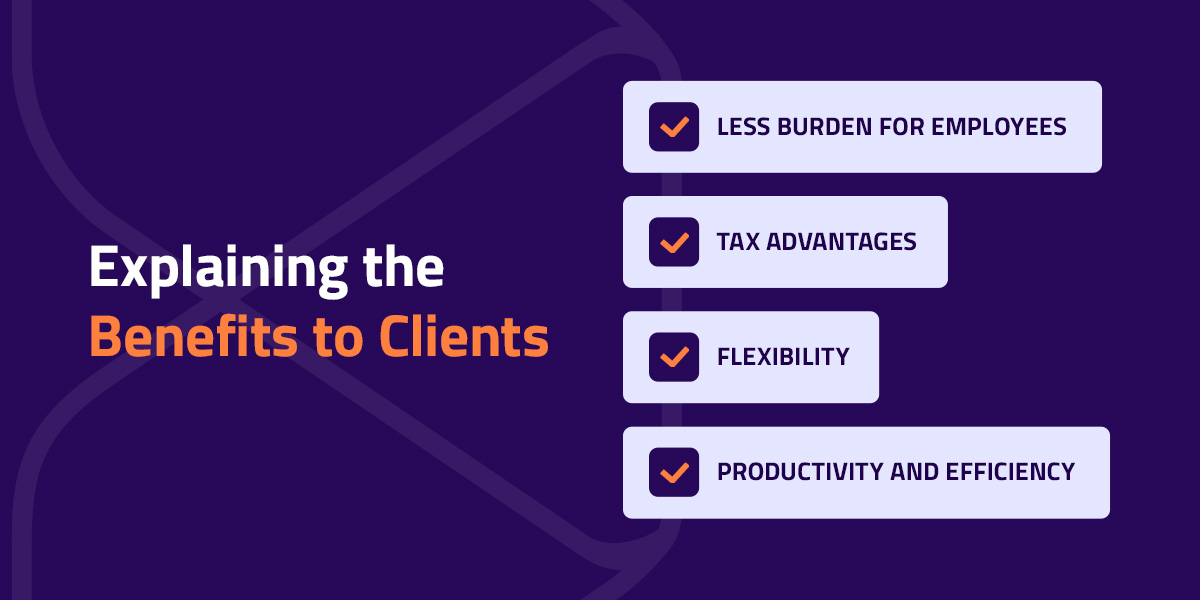
Clients in industries where cost, staff retention and employee benefits are priorities want clear answers. Here are some benefits you can share with them:
- Less burden for employees: This MERP design protects employees from high copays and deductibles. Having fewer burdens, like medical expenses from copay programs, means accessible and affordable coverage. These are important things to have in place when attracting top talent and retaining current staff.
- Tax advantages: A copay wrap option delivers a win-win situation for both employee and employer. A business can make tax-deductible contributions to the MERP, while employees receive reimbursements for medical expenses covered under the plan. This is also tax-free.
- Flexibility: One of the biggest benefits of a MERP is having the ability to tailor it to specific business needs. This includes expenses. A business can design a plan that suits the requirements of their team, based on past data around their main areas of spending or common ailments among staff.
- Productivity and efficiency: The fewer financial barriers to good healthcare, the faster employees will seek medical attention. This can lead to fewer lost hours due to sick days, increase productivity and healthier, happier employees. It can even streamline business expense budgets by reducing volatile healthcare costs.
A survey on workplace health in the U.S. found that only 24% of employees felt that their organization cared about their well-being. Having these kinds of health plans in place can show employees that their employer is invested in their happiness and health.
HRA/ICHRA Stacking: Personalized Benefits With MERP Integration
Beyond traditional MERP designs, the integration of an HRA and an individual coverage health reimbursement arrangement (ICHRA) offers even greater flexibility and personalization for employees.
While many MERP products are structured as HRA products, specific HRA types, such as the ICHRA, offer unique pathways for employers to contribute funds for employee healthcare. An ICHRA, for instance, allows employers to offer a defined contribution that employees can use to purchase their own individual health insurance plans, alongside eligible medical expenses.
Stacking these options with a MERP product allows employers to create highly customized benefit packages. For example, an employer might use an ICHRA to fund individual insurance premiums, and then “stack” a MERP on top to cover out-of-pocket costs like deductibles or copays that aren't fully covered by the individual plan.
This approach helps employees choose plans that best fit their individual needs and preferences. For employers, it transforms a variable healthcare cost into a more predictable, fixed contribution, providing significant budget control. This strategy is particularly appealing to businesses aiming to offer diverse benefit options without the administrative burden of managing multiple traditional group plans.
Navigating Network Changes: MERP for Stability
One of the most disruptive aspects of healthcare plan renewals for employees can be changes to the provider network. When a carrier alters its network, employees may lose access to their preferred doctors, specialists, or hospitals, leading to dissatisfaction and potential care disruptions. A MERP product can serve as a strategic tool to offset the impact of network changes.
By design, a MERP can be configured to reimburse employees for a portion of out-of-network costs, up to a specified limit. For example, if a client's new plan excludes a critical local hospital or a frequently visited specialist, the MERP can be structured to cover the difference between in-network and out-of-network rates for specific services, or even a set amount for services from specific providers. This capability is a powerful differentiator for brokers when discussing plan stability and employee retention with clients.
Industry-Specific MERP Designs

Understanding how MERP configurations translate to different industry needs is key to effective broker consultation. Here's a look at how objectives align with specific verticals:
- Technology startups: These companies often compete fiercely for talent and prioritize robust, flexible benefits. An HRA/ICHRA stacking model combined with a copay wrap MERP allows them to offer highly personalized health benefits, appealing to a diverse, often younger workforce who value choice and minimal out-of-pocket costs for routine care.
- Manufacturing and industrial sector: With often tight margins and a workforce that may use more specialized medical care, these businesses heavily benefit from deductible buy-down MERP products. This structure allows them to transition to an HDHP for significant premium savings, while the MERP ensures employees aren't burdened by high up-front costs for necessary care.
- Retail and hospitality: Industries characterized by fluctuating staff numbers and diverse employee needs require solutions that are easy to administer and provide immediate value. A copay wrap MERP integrated with a streamlined HDHP can offer rate relief while making essential care accessible and affordable.
Self-Funded Health Insurance and MERP
In client discussions about MERP design, brokers explaining deductible buy-downs and copay wraps may be asked about self-insured health plans. It's important for organizations to understand that a self-funded health insurance plan leaves the employer in charge of its own health plan. It also means they'll cover the claim costs incurred by any employees, even with a third-party administrator (TPA) in place to support them.
A MERP can still be used here as a self-insured plan, with employees reimbursed for copays and other deductibles. It'll be fully funded by the business, which will assume all financial risks associated with employee healthcare claims. In other words, when claims are lower than anticipated in a business budget, the business saves money. When claims exceed expectations, they'll bear the financial losses.
Reducing Risk With Stop-Loss Insurance
Some businesses may take out stop-loss insurance to protect themselves from higher-cost claims. This add-on, also known as excess insurance, helps to mitigate any unexpected claims. If an employee's claim exceeds a set amount, stop-loss coverage ensures the provider covers the excess.
This coverage option is often used by larger self-funded organizations. However, it's also a fundamental component of level-funded plans, which are specifically designed for small to midsized businesses to mitigate risk. It's considered a sound option for larger companies seeking protection against high-priced employee claims.
Stop-loss insurance will typically come in two forms. A specific stop-loss (or individual stop-loss) protects the employer from high-level claims by an individual employee. It doesn't cover total claims. Aggregate stop-loss coverage limits the total amount an employer must pay. In an aggregate claim situation, the carrier will reimburse the employer upon the end of the contract period.
An Overview of Level-Funded vs. Self-Funded Plans for Clients
Clients may want an overview of level-funded vs. self-funded plans. The key differences clients should know include:
- Organizational risk: Reiterate the full financial responsibility a business incurs with a self-funded plan. Highlight the fixed maximum a level-funded plan offers with a stop-loss.
- Cashflow considerations: Remind clients that a level-funded plan is set up with monthly fixed payments. Self-funded variable costs can be lower, but unpredictable.
- Refunds and savings: Confirm whether there's a potential credit or refund for a level-funded policy with low claims. Self-funded options mean the employer keeps any savings.
- Administrative responsibility: Explain that level-funded cover doesn't have many administrative duties, while a self-funded plan will usually need a TPA.
- Business suitability: Inform them that a level-funded plan is generally suited for businesses with between 50 to 500 employees. A self-funded plan is aimed at larger organizations.
The scope of healthcare can feel too complex for some businesses. But there's a potential opportunity within this confusion. By conveying information in a simple, accessible way, you can be seen as the viable option for businesses that need help.
Quoting Inputs and Expected Ranges
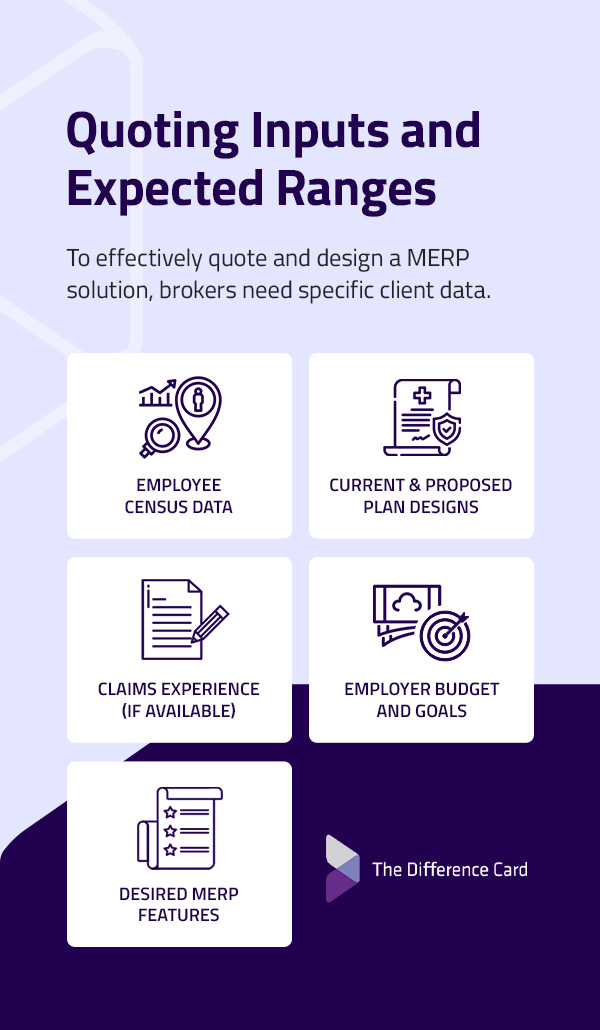
To effectively quote and design a MERP solution, brokers need specific client data. The following inputs are crucial:
- Employee census data: Number of employees (single/family coverage), age bands, geographic distribution
- Current and proposed plan designs: Details of existing health plans, including deductibles, copays, out-of-pocket maximums, and proposed HDHP options
- Claims experience (if available): Aggregate claims data or specific stop-loss claims from previous years to inform risk assessment and MERP funding levels
- Employer budget and goals: Clear understanding of the client's financial constraints, desired premium savings targets, and employee benefit goals
- Desired MERP features: Specific elements the client wants to cover, such as full deductible buy-down, specific copay reimbursement, and out-of-network coverage
While specific savings vary greatly, brokers can generally illustrate:
- Premium savings: Clients moving from traditional preferred provider organization plans to HDHP products with a MERP can often expect to see premium reductions ranging from 10% to 25%.
- Employer MERP contribution: The employer's annual MERP contribution per employee (for deductible buy-downs or copay wraps) typically ranges from $500 to $3,000, depending on the reimbursement limits and the underlying health plan deductible. This contribution is usually offset by the premium savings.
Request a Proposal Today
Are you ready to save clients money while keeping their employees satisfied and covered? The Difference Card offers a range of compliance services for brokers. Request a proposal from us to learn more about our work helping brokers create efficient and compliant healthcare plans.