

The Broker’s Playbook: A Modern Guide to Self-Funding, Stop-Loss, and MERP
Key Takeaways A Quick Summary
Key Takeaways
- Self-funded health insurance means the employer pays employee claims as they occur instead of paying fixed premiums; it offers customization, claims transparency, potential cost savings (including ERISA treatment and exemption from state premium taxes), but introduces variable monthly costs and administrative responsibilities.
- Stop-loss insurance is used with self-funding to limit employer exposure to large or excessive claims; it comes in two main types—specific (protects against a single employee's catastrophic claim) and aggregate (protects against total group claims exceeding a threshold)—and acts as a financial safety net.
- A MERP (Medical Expense Reimbursement Plan) is an employer-funded reimbursement arrangement that helps cover deductibles, coinsurance, or other eligible expenses; it gives employers cost control and flexibility, can improve employee satisfaction and retention, and generally offers tax-deductible benefits when properly administered under ERISA/IRC rules.
- Layering a MERP with stop-loss under a self-funded model can lower overall risk and stop-loss premiums: the MERP pays routine/limited expenses up to set limits, and stop-loss reimburses the employer for costs that exceed those limits, protecting the business from catastrophic claims while preserving employee coverage.
- Brokers should educate clients on differences between level-funded and self-funded plans, administrative and compliance complexities, and that MERP supplements but does not replace health insurance; properly communicating these points and offering compliance support can help brokers build trust and win business.
With fully insured healthcare plans becoming increasingly complex and expensive, many organizations are seeking alternatives that provide excellent employee coverage without incurring unnecessary expenses.
Self-funding can be a solution to common problems. However, there's a lot that brokers need to understand about how clients can benefit from a self-funded model. Many are unaware that combining stop-loss and Medical Expense Reimbursement Plan (MERP) options can deliver a layered insurance plan that offers business savings without affecting employee coverage.
This guide to self-funding, stop-loss and MERP products can help you provide clients with strategic, customized, and cost-effective solutions to these issues.
What Is Self-Funded Health Insurance?
A self-funded or self-insured healthcare plan is a healthcare plan that doesn't require an employer to pay a monthly premium to an insurance company. Instead, an employer pays for an employee's claims as they occur.
This approach to healthcare coverage helps organizations reduce unnecessary expenses while offering greater flexibility in the type of coverage provided. However, this model also means potential business costs may fluctuate from month to month.
The Benefits of a Self-Funded Health Insurance Model
A self-insured healthcare plan can offer multiple benefits to employers and employees. To determine which benefits may be most useful, brokers and employers must develop a comprehensive understanding of them all. This knowledge is especially important when comparing healthcare plans, particularly for clients seeking level-funded vs. self-funded options.
The main benefits of a self-funded health insurance model are:
- Customization: Self-insured healthcare plans can be customized to meet the needs of an organization's budget and employees. Instead of having to accept a "one-size-fits-all" insurance plan, companies can work with a third-party administrator (TPA) to create a personalized option.
- Transparency: Employers have access to comprehensive claims data. They can use this information to identify patterns or key drivers in employees' healthcare claims and implement wellness plans addressing those issues, reducing long-term health concerns and absences.
- Costs and fees: Employers don't need to pay insurance premiums up front when using a self-funded health insurance model, though they usually prefund a claims account. Under this plan, organizations are also exempt from any state-imposed health insurance premium tax, as self-insured plans are governed by federal law, such as the Employee Retirement Income Security Act (ERISA). Employers also keep any surplus funds in the event of low annual claims.
Level-Funded vs. Self-Funded Insurance
It's essential to have a clear understanding of the main differences between level-funded vs. self-funded insurance. Both are alternatives to fully insured group plans, but they differ in cost structure, cash flow predictability, and compliance considerations.
A level-funded insurance plan works similarly to a self-funded plan in that the employer pays for claims, but it requires a fixed monthly amount to cover administrative fees, maximum expected claims, and stop-loss premiums. Think of it as a hybrid between self-funded coverage and a fully insured plan. Level-funded plans make costs and cash flow more predictable by standardizing monthly payments.
Level-funded insurance plans must comply with federal laws, such as ERISA and the Affordable Care Act (ACA), and may be subject to additional state insurance regulations, which are generally related to stop-loss coverage and group size requirements. Though stop-loss insurance protects employers against unusually high claims, it does not make a level-funded plan fully insured — it is still self-funded under ERISA. However, some states treat level-funded plans as insured plans for consumer protection purposes.
Self-Funding and the Role of Stop-Loss Insurance
While self-funding offers numerous benefits to both employees and employers, a business assumes the risk of paying for any potential claims. This may lead to situations where an employee requires a serious medical procedure or an unexpected number of claims are made within a year, resulting in significant financial burdens for the employer.
To mitigate some of these potential risks, an employer can add stop-loss insurance to its self-funded health insurance plan. This add-on gives the employer more peace of mind by placing a limit on the amount employees can claim. If a claim goes over the set amount, the insurer covers the remaining excess.
In other words, stop-loss insurance is a main reason why self-funding is an option for many small to medium-sized enterprises.
What Are the Two Types of Stop-Loss Insurance?
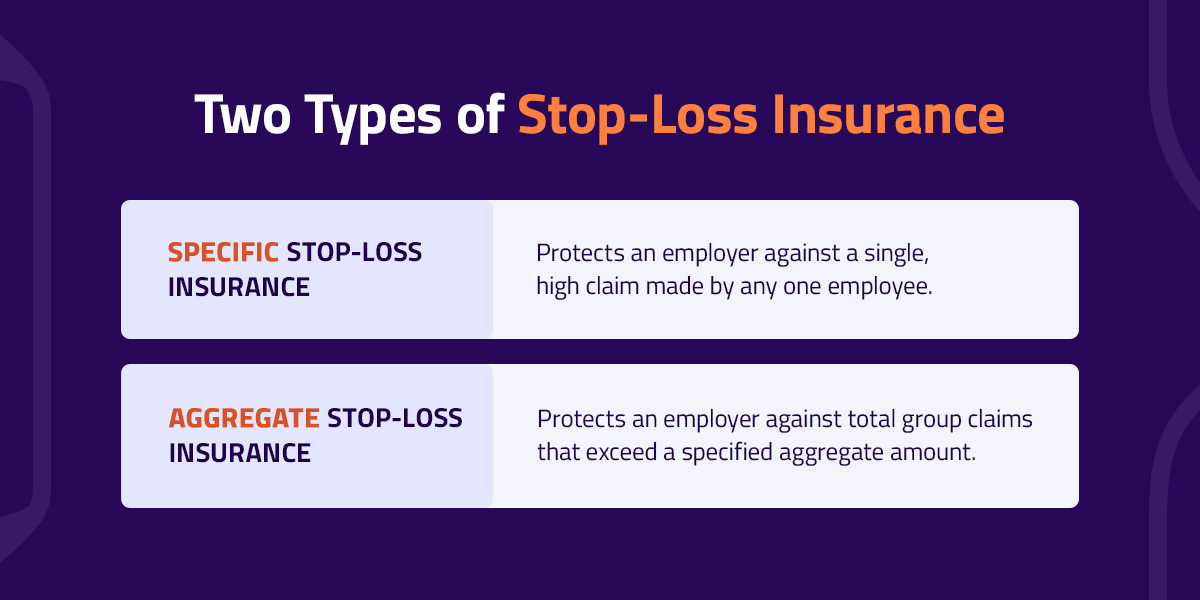
There are two types of stop-loss insurance options available to employers — specific or individual stop-loss and aggregate stop-loss. However, these two options typically include variations within each choice.
- Specific stop-loss insurance: This coverage protects an employer against a single, high claim made by any one employee.
- Aggregate stop-loss insurance: This coverage protects an employer against total group claims that exceed a specified aggregate amount, which the company pays over the course of a contract. When a contract period ends, the insurer reimburses the employer.
Many employers consider applying both types of stop-loss insurance to their plan, but this isn't always the case.
Explaining Stop-Loss Insurance to a Cautious Client
Communicating the benefits and limitations of stop-loss coverage is essential in ensuring that clients receive the most accurate information. For brokers, this can mean explaining the fundamentals of this add-on as part of a self-funding plan.
Consider how you frame the information you're providing, and take the concerns of employers into account. After all, it's understandable to have worries and questions. Use the analogy of a safety net to help provide clients with some more financial stability and predictability during those "what if" worst-case scenarios.
Choose a specific instance of a "what if" case to help create a point of reference. For example, if an employer receives an employee claim for a complex surgery or preterm birth, stop-loss insurance can serve as a safety net if the claim exceeds the agreed-upon set amount. Specific stop-loss coverage protects the employer against a catastrophic medical stop-loss claim from a single employee. In contrast, aggregate coverage protects the employer from total group medical claims exceeding the aggregate amount.
How a MERP Can Help Reduce Risk
A MERP can be an effective way for an employer to lower healthcare costs. By acting as a type of specialized Health Reimbursement Arrangement (HRA), a MERP enables the employer to adjust plans annually while making the best use of the budget.
To reap the benefits of a MERP and mitigate potential business risks, brokers and employers must understand how a MERP operates and how inadequate employer compliance can limit the tax advantages of a robust healthcare plan.
What Is a MERP?
A MERP helps employees cover their healthcare expenses. As an employer-funded benefit, a MERP allows an employer to reimburse employees for certain medical expenses, such as deductibles or coinsurance, or costs not covered under their existing health insurance.
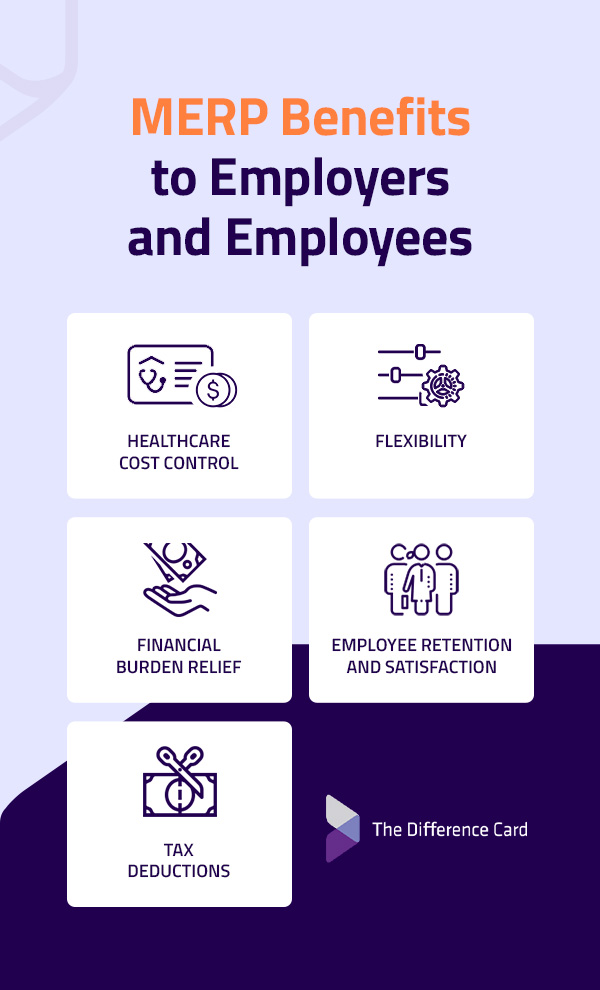
With health insurance costs predicted to increase, clients may be curious about how a MERP can help them. While MERP isn't part of any standard coverage, it can be an important add-on that offers many benefits to employers and employees, including:
- Healthcare cost control: MERP products provide an employer with control over cost management and expenses by enabling them to implement contribution limits and select which expenses are eligible for reimbursement. For example, implementing a MERP to reimburse employees up to $2,000 annually may allow an employer to choose a high-deductible health plan with lower premiums, saving money overall.
- Flexibility: An employer can customize a MERP to meet its needs and the needs of its employees, creating a more relevant range of benefits.
- Financial burden relief: Employees gain more monetary support through reimbursement, reducing the financial burden of eligible medical expenses.
- Employee retention and satisfaction: Providing employees with MERP products and reimbursement opportunities can enhance employee satisfaction and improve overall staff retention.
- Tax deductions: Most MERP contributions are tax-deductible for the employer, leading to further cost savings down the line.
To gain the full benefits of a MERP and its associated tax benefits, the employer must adhere to the necessary legal requirements and regulations, such as ERISA and the Internal Revenue Code (IRC).
MERP and Self-Funded Insurance Comparisons
MERP and self-funded coverage are both Section 105 plans — self-funded health insurance plans where employers cover healthcare expenses directly — but they operate in different ways. As a broker, you must be able to explain these differences clearly to help your clients choose the best options for their businesses.
To layer or separate these coverages to accommodate the risk appetite of each client, understanding how these options can be cost-effective without affecting the level of coverage offered is crucial.
Risk Exposure
Self-funded coverage claims made without stop-loss insurance can be risky for organizations, as this type of coverage means the employer assumes all insurance claim risks. If an employee makes a claim for a serious medical condition, the associated costs can have a significant impact on the business's income.
However, the same scenario with a MERP exposes the employer to less risk, as it sets a specific allowance per employee. Employees can only claim costs that meet the set maximum amount.
Employer Costs
Both coverage options are typically more cost-effective than standard insurance due to the lack of third-party premiums. Self-funded costs are slightly more challenging to predict, as claims can vary, and the plan usually covers a wider range of potential healthcare expenses.
A MERP is intended to work as an add-on, which means it often costs less. With a low-cost, high-deductible insurance plan, an employer can better predict costs through a lower fixed premium amount and a set MERP limit.
Administrative Complexities
Self-funded plans require a business to do the administrative work that a traditional insurer would usually handle. Many employers turn to an experienced support team to ensure all administrative tasks are complete and legally compliant, which comes with additional costs.
With MERP products, employees are only reimbursed for a specific amount of expenses and coverage. Companies can usually process these funds easily and add them to an employee's paycheck.
Key Considerations for Clients
The most important thing for you to explain to employers and clients is that a MERP doesn't replace existing healthcare coverage. It should complement any existing insurance. Clients who could benefit from MERP products should have a clear understanding of what this coverage entails for both employees and their business.
Some key talking points to consider are listed below:
- Employers can choose to offer MERP products alongside a group insurance plan or as a stand-alone product.
- Medical expense reimbursements are not considered wages, so they are not subject to Federal Unemployment Tax Act (FUTA) or Federal Insurance Contributions Act (FICA) mandates.
- Reimbursements aren't included in an employee's gross income.
- MERP contributions from employers are a tax-deductible business expense.
- The MERP covers healthcare-related expenses that standard insurance doesn't cover, and an employer can decide which expenses to reimburse.
- Employers must adhere to IRS guidelines for documentation, nondiscrimination, and eligible expense records to make the most of these tax benefits.
How a MERP and Stop-Loss Work Together
An employer can layer a MERP and stop-loss together within a self-funded insurance model. When a business has a high-deductible healthcare plan and a MERP, an underwriter may deem it a lower potential risk, which can result in a lower stop-loss premium.
This process follows three main steps:
- An employer uses the MERP structure to pay for standard medical expenses for employees. These payments continue up to the specified or aggregate stop-loss limit.
- Once a claim has exceeded the deductible limit, the stop-loss insurance covers the remaining costs. The insurer then reimburses the employer for the difference.
- Layering a self-funded insurance plan this way ensures that unexpected catastrophic claims don't impact the employer's finances, while also affirming the self-funding model as beneficial to the employer and employee.
Through a clear understanding of what all three options can offer when layered and applied effectively, employees can maximize their benefits at minimal risk. This approach uses the MERP as the primary funding mechanism for claims, while maintaining a stop-loss "safety net" to protect organizations against unexpectedly high employee claims costs.
Become an Indispensable Partner to Your Clients
Information, understanding, and communication are still vital components of winning over clients. This guide to self-funding, stop-loss, and MERP options can help you build trust with your clients and create cost-efficient plans for them.
By bringing this strategy to clients, you can provide a solution that leverages all the benefits of self-funding insurance plans and integrates some safety barriers without impacting the quality of healthcare coverage their employees receive.
Are you ready to win more business and be the go-to broker for healthcare insurance savings and integration scenarios? The Difference Card offers a range of compliance services to help brokers create cost-effective, efficient, and compliant healthcare plans. Request a proposal from us today to learn more.