

A Guide to MERP Options and Their Tax Benefits and Advantages

Key Takeaways A Quick Summary
Key Takeaways
- A MERP (Medical Expense Reimbursement Plan) is an employer‑funded benefit that reimburses employees for eligible out‑of‑pocket medical expenses, allowing employers to offer competitive health support without raising insurance premiums.
- MERPs provide significant tax advantages: employer reimbursements are generally deductible as business expenses (IRS §162), and qualified employee reimbursements are excluded from taxable income (IRS §105(b)) and not subject to Social Security, Medicare (FICA) or FUTA payroll taxes.
- IRS rules that govern MERP tax treatment include Section 105 (tax‑free reimbursements when substantiated), Section 162 (employer deduction of qualified reimbursements), and Section 213(d) (defines qualifying medical expenses such as doctor visits, prescriptions, hospital care, dental, vision, mental health, medical equipment, deductibles and copays).
- To maintain tax benefits, employers must follow compliance steps: adopt a written plan document, require substantiation/claims documentation before reimbursement, and comply with nondiscrimination rules (IRS §105(h)) so the plan does not favor highly compensated individuals.
- Beyond taxes, MERPs support long‑term cost management (set reimbursement limits, target high‑impact expenses), can complement high‑deductible health plans, and are often easier to administer and keep compliant when outsourced to an experienced MERP administrator.
Tax Benefits of a MERP
Employer-sponsored healthcare costs increase year after year, putting pressure on businesses of every size. Many employers want to offer competitive health benefits without taking on steadily rising costs, and a Medical Expense Reimbursement Plan (MERP) offers just that, an employer-funded benefit that reimburses employees for eligible out-of-pocket medical expenses.
Beyond helping employees manage healthcare costs, a MERP is one of the few employee benefits that creates meaningful tax advantages for both employers and employees. These tax benefits can help organizations and producers build a more cost-effective benefits strategy to support the workforce.
What Tax Benefits Does a MERP Offer?
A MERP, a type of Health Reimbursement Arrangement (HRA), provides tax advantages for employers and employees when it complies with the Internal Revenue Service (IRS) requirements. Employers can deduct reimbursements as business expenses, while employees generally get qualified reimbursements free from federal income and payroll taxes. This combination makes a MERP one of the most tax-efficient ways to supplement employees' healthcare benefits.
Key points to keep in mind:
- Employer reimbursements generally qualify as deductible business expenses under IRS Section 162.
- Qualified reimbursements are excluded from employees' taxable income under IRS Section 105(b).
- MERP reimbursements are not subject to Social Security or Medicare taxes.
- Employers do not pay Federal Insurance Contribution Act (FICA) or Federal Unemployment Tax Act (FUTA) taxes on qualified reimbursements.
- Both employers and employees can reduce their overall tax burden while improving healthcare benefits.
These tax advantages become more valuable when combined with a carefully designed health benefits strategy. Understanding the rules behind these savings helps employers maximize the value of their MERP while maintaining compliance.
How Do MERP Tax Benefits Work for Employers?
Instead of paying higher insurance premiums alone, employers can reimburse eligible healthcare expenses while getting valuable tax deductions.
Under IRS Section 162, certain qualified MERP reimbursements are generally accepted as “ordinary and necessary” business expenses. This means employers can deduct eligible reimbursements from their taxable income in the same way they deduct other employee benefit expenses. These deductions can help reduce a company's overall tax liability while supporting employees with healthcare costs.
Qualified MERP reimbursements are not treated as wages. This means employers generally do not pay FICA taxes, which fund Social Security and Medicare, or FUTA taxes on approved reimbursements. Avoiding FICA taxes alone means employers save 7.65% on every dollar reimbursed, compared to paying an equivalent amount as wages.
This tax treatment also gives employers more flexibility when designing their benefits package. Instead of increasing taxable wages to help employees cover medical expenses, organizations can reimburse qualified healthcare costs through a MERP while preserving the associated tax advantage.
For example, if an employer reimburses $500 in medical expenses through a MERP, they avoid $38.25 in payroll taxes that would have been owed if that $500 had been paid as wages. Neither the employer nor the employee pays payroll taxes on that amount. Compared with providing the same amount as taxable wages, the MERP approach can lower taxes for both parties while delivering the same financial support.
Over time, these savings can become significant, especially for employers with larger workforces or organizations looking for alternatives to paying insurance premiums.
A MERP Supports Long-Term Cost Management
The tax savings associated with a MERP are only part of its value. Many employers also use these plans to create a more predictable approach to managing healthcare costs over time.

Traditional group health insurance premiums can increase annually, making it difficult to forecast benefits spending. A MERP gives employers greater flexibility by setting annual reimbursement limits and eligible expenses. This allows organizations to align their healthcare budget with business goals while continuing to provide meaningful financial support for employees.
For example, an employer may decide to reimburse deductible expenses, prescription medications, or specialist visits that employees commonly use. By focusing reimbursement dollars where they have the most impact, employers can improve the overall value of their benefits package without significantly increasing costs.
A MERP can also complement a high-deductible health plan (HDHP). Pairing these plans allows employers to control premium costs while helping employees manage higher out-of-pocket expenses. The result is a balanced benefits strategy that supports both financial sustainability and employee well-being.
How Do Employees Benefit From a MERP?
Aside from tax benefits, a MERP can provide meaningful financial relief throughout the year, particularly when unexpected healthcare expenses arise.
Consider an employee who visits a specialist several times to manage a chronic health condition. Although their health insurance covers much of the treatment, they are still responsible for copayments and deductible costs. If those expenses qualify under the employer's MERP, the employee can submit documentation for a potential reimbursement, reducing their out-of-pocket costs.
Even routine healthcare expenses can add up over time. Reimbursements for eligible services help employees budget more effectively and reduce financial stress without increasing their taxable income.
What IRS Rules Govern MERP Tax Benefits?
Several sections of the Internal Revenue Code work together to establish the MERP tax treatment. Each section serves a different purpose, helping employers understand why these plans offer valuable tax advantages.
IRS Section 105: The Foundation of Tax-Free Reimbursements
Section 105 is the primary IRS provision that makes MERP reimbursements tax-free for employees. It allows employers to reimburse qualified medical expenses without treating those payments as taxable wages for employees. To qualify, expenses must meet the definition set in Section 213(d) and must be substantiated before employees are reimbursed.
A Section 105 plan can work with a health savings account (HSA), which lets employees put their pretax dollars toward future medical expenses. It's helpful for employees with regular medical needs. Instead of increasing their salary, which gets taxed, giving them that same amount through a Section 105 plan gives them the full value.
IRS Section 162: Why Employer Contributions Are Deductible
Under Section 162, what an employer pays into a MERP is treated as a standard business expense, which reduces the company's taxable income. This deduction reduces taxable business income while helping employers invest in meaningful healthcare benefits for their workforce.
To qualify for this deduction, the MERP must be funded and established by the employer, offered through an official plan structure, and used only to reimburse qualifying medical care expenses.
This tax treatment can also support more effective financial planning. Because qualified MERP reimbursements are generally deductible, employers can incorporate them into their annual benefits budget with greater confidence. Instead of absorbing the full impact of rising insurance premiums, organizations can invest in employee healthcare while managing overall benefit costs.
IRS Section 213(d): What Expenses Qualify
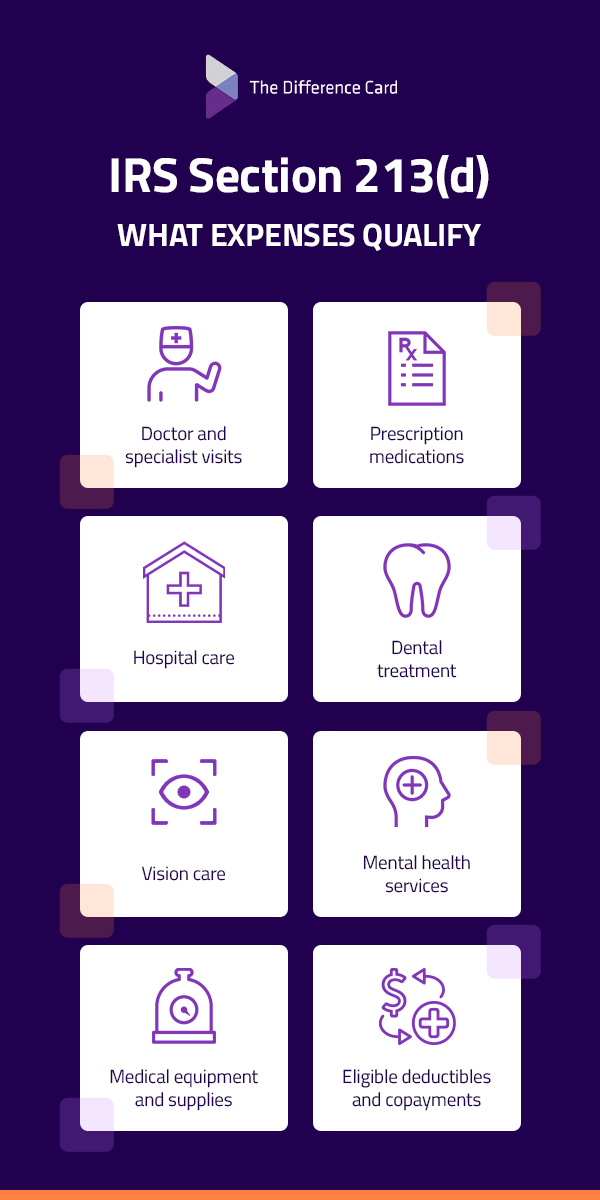
Section 213(d) defines which medical expenses are eligible for MERP reimbursement. In general, qualifying expenses are those primarily intended to diagnose, treat, prevent, or manage a medical condition. Common examples include:
- Doctor and specialist visits
- Prescription medications
- Hospital care
- Dental treatment
- Vision care
- Mental health services
- Medical equipment and supplies
- Eligible deductibles and copayments
The IRS has a complete list of qualifying medical expenses in Publication 502, which employers and plan administrators can use for guidance.
Are MERP Reimbursements Taxable Income for Employees?
No, qualified MERP reimbursements are generally not considered taxable income for employees.
Under IRS Section 105(b), employers can reimburse eligible medical expenses without those payments being included in an employee's gross income. When the plan complies with IRS requirements, employees get the full value of their reimbursement without paying federal income tax.
To remain tax-free, a MERP must meet several requirements:
- The employer must maintain a compliant written plan
- Reimbursements must cover eligible medical expenses defined by the IRS
- Employees must submit documentation before reimbursement
- The plan must comply with applicable nondiscrimination rules
For employees, the result is straightforward. A compliant MERP helps offset healthcare expenses while allowing more of each reimbursement to stay in their pocket.
What Must Employers Do to Keep MERP Tax Benefits Intact?
Maintaining the tax advantages on a MERP depends on proper plan administration. Fortunately, the core requirements are clear and manageable with the right processes in place.
Have A Written Plan Document
First, employers must establish a written plan document. This document is the plan's foundation, clearly outlining how it operates for both the employer and employees. In addition to defining who is eligible to participate, it explains:
- Which medical expenses qualify for reimbursement
- The annual reimbursement limits
- How employees submit claims
- How reimbursements are processed
A clear, well-documented plan promotes consistency, helps employees understand their benefits, and demonstrates that the MERP is administered in accordance with IRS requirements.
Follow Nondiscrimination Requirements
Employers must also follow IRS nondiscrimination requirements. These rules, primarily outlined in IRS Section 105(h), help ensure the plan does not unfairly favor a Highly Compensated Individual (HCI). An HCI typically includes officers, shareholders owning more than 10% of the company's stock, or the highest paid 25% of all employees.
The plan must pass an eligibility test to maintain compliance. This test ensures a sufficient percentage of non-HCI employees are covered. A benefits test will guarantee that all participants get comparable benefits.
Maintain Relevant Documentation
Finally, every reimbursement must be supported by the right documentation. This includes meticulous claim adjudication, in which each reimbursement request is carefully verified against the plan document and the IRS Section 213(d) eligibility criteria. Employees should submit records, such as receipts or Explanation of Benefits (EOB) statements, showing the expense qualifies under the plan before reimbursement can be approved.
Many employers choose to work with an experienced MERP administrator to simplify these responsibilities. Professional administration helps streamline claims, maintain accurate records, and support ongoing compliance, allowing employers to focus on delivering valuable healthcare benefits. By outsourcing these significant administrative burdens, employers can minimize operational headaches and confidently maximize their MERP value.
Frequently Asked Questions
Understanding how a MERP works can help employers make more informed decisions about their benefits strategy. Here are the answers to some of the most common questions about MERP tax benefits, eligibility, and compliance:
Does a MERP Reduce Payroll Taxes?

Yes. Qualified MERP reimbursements are generally exempt from payroll taxes, including Social Security and Medicare taxes. Because these reimbursements are not treated as taxable wages, employers and employees can both benefit from lower payroll tax obligations.
Over time, these payroll tax savings can complement the income tax advantages that make a MERP a cost-effective employee benefit.
Who Pays for a MERP?
A MERP is entirely funded by the employer. Employees do not contribute to the plan, and they receive reimbursement for eligible medical expenses after submitting the required documentation. Employers determine the reimbursement limits and covered expenses when designing the plan.
This employer-funded structure gives organizations greater control over benefit costs while providing employees with additional financial support for healthcare expenses.
Can a MERP be Offered Alongside Group Health Insurance?
Yes. Many employers use a MERP to supplement a traditional group health plan and other healthcare expenses that qualify under IRS Section 213(d). Before incurring an expense, employees should review their plan documents or speak with their plan administrator to confirm whether it qualifies for reimbursement.
In this arrangement, the health insurance policy continues to provide primary coverage, while the MERP helps reimburse eligible out-of-pocket costs that employees would otherwise pay themselves. This approach allows employers to enhance their benefits package while helping employees better manage healthcare expenses.
Why Should Employers Work With a MERP Administrator?
Administering a MERP involves more than processing reimbursements. Employers must maintain plan documents, review claims, verify supporting documentation, and ensure the plan complies with applicable IRS requirements. An experienced MERP administrator helps manage these responsibilities, streamlines day-to-day administration, and provides guidance as regulations evolve. This support reduces the administrative burden on employers while helping preserve the plan's valuable tax advantages.
Learn More About MERP Tax Benefits With The Difference Card
A MERP helps employers manage healthcare costs while creating meaningful tax savings for both the business and its employees. Employers can deduct qualified reimbursements as business expenses, while employees generally enjoy tax-free reimbursement for eligible medical costs. Together, these advantages make a MERP an effective way to strengthen benefits without increasing tax exposure.
For over 20 years, The Difference Card has helped employers and producers build cost-effective healthcare strategies through expertly administered MERP solutions. Our team provides custom plan design, claims administration, compliance support, and ongoing guidance to help employers maximize savings while delivering a better benefits package. Whether you are evaluating a MERP for the first time or looking to optimize your current program, we are here to help you find the right solution for your organization.
Contact us today to learn more or to request a proposal.