

What Is Healthcare Price Transparency and What It Means for You
Table of Contents
- Why Is Healthcare Pricing So Complicated?
- The Rules That Changed the Game
- For Employers: 3 Ways Price Transparency Impacts Your Business
- For Members: How to Use Price Transparency to Save Money
- How The Difference Card Makes It Simple
- Frequently Asked Questions
- The Future of Healthcare Pricing
- Make Healthcare Easier With The Difference Card
Healthcare is essential, but with rising medical service prices and hidden costs that land you in unexpected debt, it feels more like a luxury than a necessity. Most people avoid a visit to the doctor's office or hospital because of this expense — but the truth is, if you need care, it can't be delayed or avoided.
With recent regulations like the Hospital Price Transparency Rule and No Surprises Act, you'll have access to up-front costs to compare with different providers, giving you the power of choice and relieving the stress and financial burden. This guide will help you understand healthcare price transparency, what it means for employers and health insurance members, and how The Difference Card makes health coverage simple.
Why Is Healthcare Pricing So Complicated?
Healthcare prices are difficult to predict and understand, and even more challenging to compare from one provider to the next. Most of the time, you pay for healthcare services without knowing the cost or what you're paying for.
It's like dining at a restaurant with no menus. You don't know what's served or how much it costs. The waiter shares what's available, and depending on which diners club you belong to, you'll pay a certain price. At the end of your meal, you receive your bill, along with other unexpected charges for the chef, the dishwasher, utensils used, and even the furniture you're dining on. But your friend visited this restaurant last week, ordered the same meal with a different diners club membership, and paid less than you did.
This is the healthcare system. You receive medical services, unsure of the costs and inclusions, and are expected to pay the bill regardless. Healthcare facilities don't share their prices because different insurers have negotiated unique, confidential rates with them, making a standard price difficult to pinpoint.
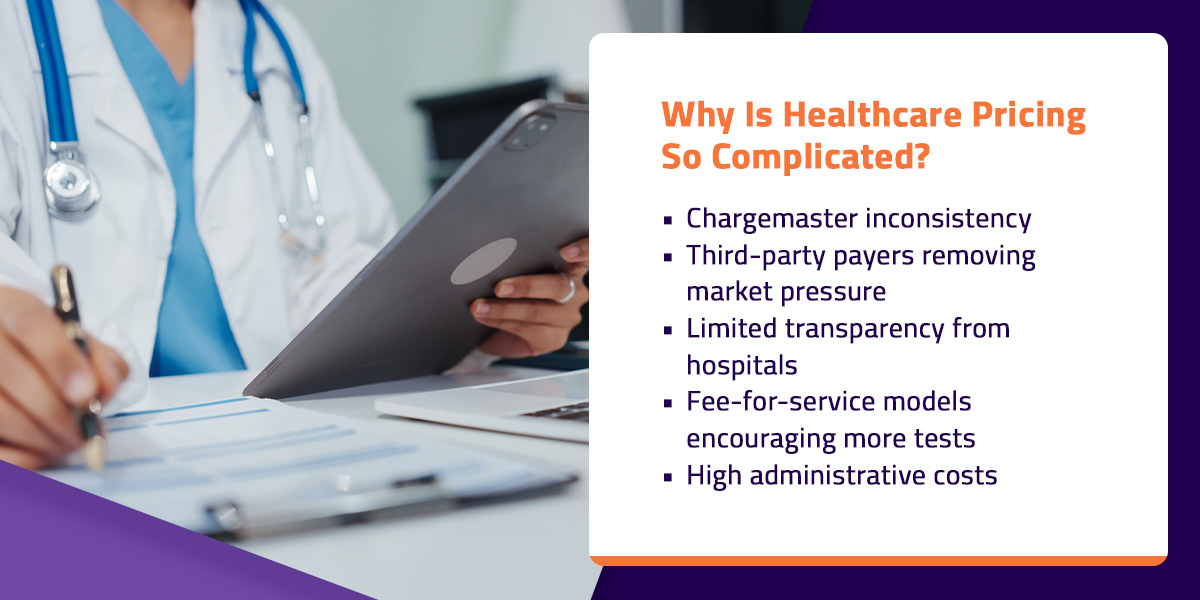
Other factors make it more complicated, such as:
- Chargemaster inconsistency: Hospitals use an extensive, internal list called a chargemaster that sets inflated prices for each item and service, but rarely reflects the actual market value.
- Third-party payers: Patients aren't negotiating prices. Employers and insurers are, which removes market pressure to keep prices low.
- Limited transparency: Although new regulations are forcing hospitals to publish their negotiated rates, not all comply.
- Fee-for-service model: Doctors are paid for individual services, which encourages more tests and procedures rather than the best value.
- High admin costs: Large administrative teams are needed to handle complicated billing, coding, and insurance negotiations, which increases costs.
With a lack of price transparency in healthcare, many patients can’t afford the care they need, so they avoid or delay doctor or hospital visits because they're too expensive.
The Rules That Changed the Game
New regulations focus on giving you greater control over your healthcare decisions. With prices being up front and available to compare, you and your finances will be protected from unexpected, high-cost bills when you need care. While the system is still complicated, the shift toward price transparency and value-based care addresses the hidden costs, messy processes, and administrative hurdles you need to navigate to receive care. Hospitals and insurers are under stricter regulations to reveal prices so you can make cost-effective choices.
The Hospital Price Transparency Rule
As of 2021, the Hospital Price Transparency Rule requires U.S. hospitals to make their established standard charges public.
These standard charges include:
- Gross charges found in hospital chargemasters.
- Cash-discounted prices for patients who pay cash.
- Negotiated rates with insurers.
The standard charges must be clear and easily accessible, and made available to the public in two ways:
- A detailed machine-readable file with standard charges for all items and services provided at the hospital
- An easy-to-use online list or price estimator tool for at least 300 standard, shoppable healthcare services, especially those that can be scheduled in advance
However, a 2025 report found that only 36% of 2,000 hospitals are compliant with the price transparency rule, meaning most hospitals still hide up-front prices from patients.
The No Surprises Act
The 2022 No Surprises Act (NSA) protects patients with private health insurance from unexpected medical bills by stopping balance billing. Balance billing happens when you're charged the difference between the total cost and the insurance-covered amount of a bill, mainly when out-of-network providers are used.
If you are uninsured or use self-pay, this act ensures you receive a good-faith estimate that provides an up-front breakdown of expected charges before you receive care, enabling medical billing transparency.
This act protects patients through:
- Emergency care cover: When you receive emergency care at an out-of-network ER, you're protected and can only be charged in-network cost-sharing amounts, such as co-pay or deductibles.
- In-network facility protection: If you visit an in-network hospital for a scheduled surgery but are treated by an out-of-network doctor, that doctor cannot surprise-bill you.
- Dispute rights: You can dispute a received bill if it's at least $400 higher than the good-faith estimate.
For Employers: 3 Ways Price Transparency Impacts Your Business
For an employer who provides employee health insurance, price transparency is a game-changer. It benefits your company by improving your workplace culture, supporting your employees, and reducing the stress that comes with unpredictable healthcare bills.
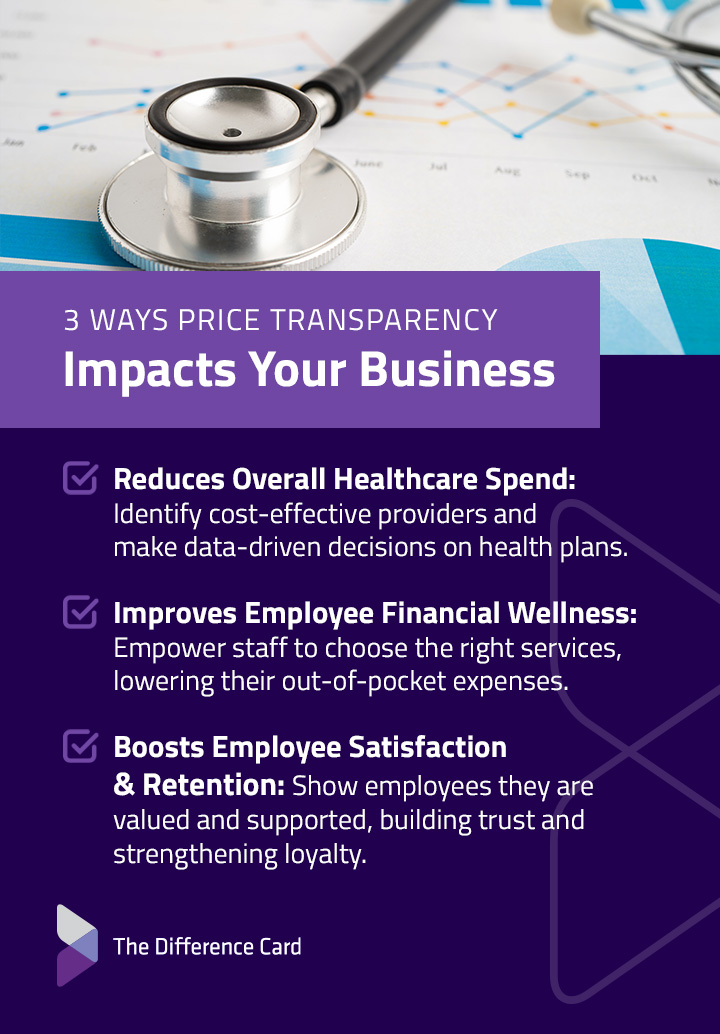
1. Reduces Overall Healthcare Spend
Price transparency allows you to identify cost-effective providers, lowering health plan expenditures. With access to "price tags" for healthcare services, the shift from hidden costs to a shopper's market lets you make more strategic, compliant, and data-driven decisions on healthcare plans. It allows you to partner with insurers and push for more competitive rates from providers. Being an employer, you're in a unique position to reduce employee medical costs and drive change in the healthcare system.
When looking for high-value and cost-effective health benefits, keep these steps in mind:
- Analyze spend: Identify where health plan funds are being spent and which providers deliver the best value.
- Compare rates: Compare current insurer-negotiated rates against competitors to see if you're overspending.
- Educate employees: Provide tools to help them compare prices and quality.
2. Improves Employee Financial Wellness
If you offer health benefits, it's your legal duty under federal law to act in the best interest of your employees. This means you need to research, compare, and monitor the costs and quality of your health plans to ensure your employees aren't overpaying. Healthcare price transparency empowers staff to choose the right medical services for themselves, lowering out-of-pocket expenses and surprise medical bills and boosting trust in employer-provided benefits.
The benefits of improved employee financial wellness include:
- Lower financial stress and debt: By having access to service costs before treatment, employees can avoid unexpected medical debt.
- Encourages careful service considerations: Employees can compare prices for specific services and procedures, allowing them to choose the right provider.
- Better use of benefits: Online transparency tools help employees make informed healthcare decisions and avoid unknown costs.
- More trust: Open communication about healthcare costs makes employees feel supported.
3. Boosts Employee Satisfaction and Retention
Happy employees are more productive and enhance overall performance. When you prioritize their holistic well-being, they're more likely to continue working with your company. By giving them control and knowledge over their own medical decisions, they'll feel valued and supported. Healthcare price transparency serves as a strategic tool to boost workplace culture and employee satisfaction. It builds trust and strengthens loyalty.
The return on investment in backing your most valuable assets will drive noticeable improvements, such as increased productivity, reduced turnover costs, and enhanced operational performance.
For Members: How to Use Price Transparency to Save Money
Healthcare price transparency also benefits insurance members. Easily accessible and clear information on medical procedures, services, and all costs involved in the care you need will give you peace of mind. With this information readily available online, you can compare provider prices, make an informed decision on cost-effective care, and better plan and manage your expenses.
With this shift in healthcare billing, you don't have to stress over hidden costs and surprise medical bills. By taking control of your healthcare, choice of providers, and medical budget, you'll shift from a passive healthcare participant to an empowered patient steering your own treatment and care.
How to Find and Compare Prices
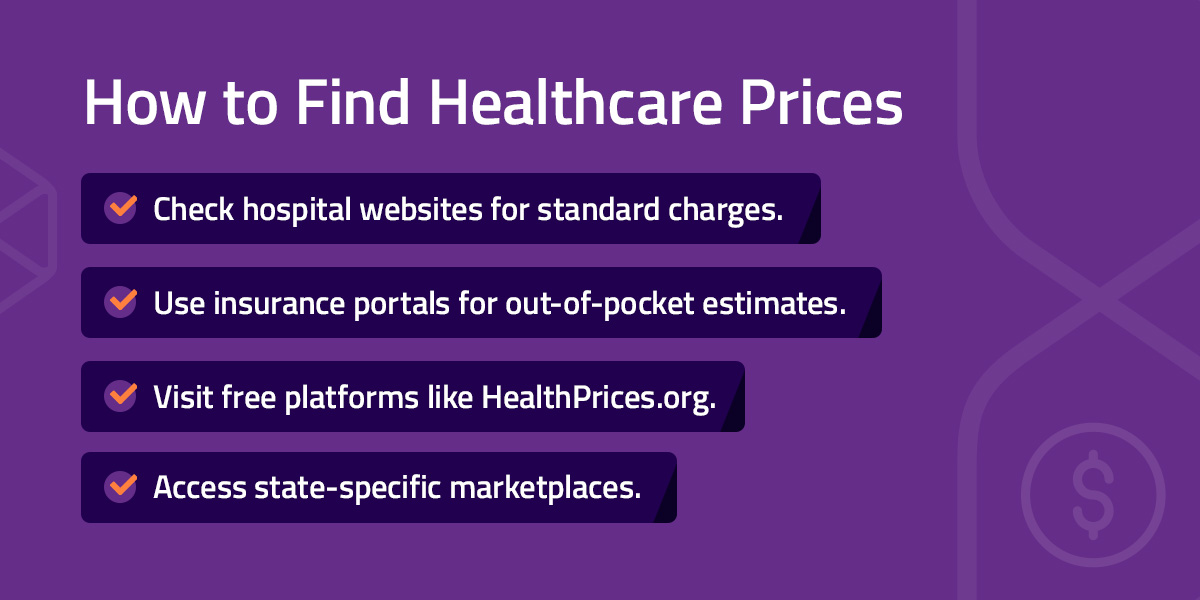
To start saving money on healthcare, you need to know where to find and compare prices. Most information can be found online with a quick search on local healthcare facility websites and third-party tools.
You can find healthcare prices by searching:
- Hospital websites: For specific procedures, check your local hospital websites, which are required to post prices for procedures, services, and specialized tools.
- Insurance portals: Insurers must have out-of-pocket cost estimates for over 500 services on their websites.
- HealthPrices.org: This free online platform provides cost estimates for various healthcare services nationwide.
- State-specific marketplaces: Some states operate their own marketplaces and information systems, which can be accessed through HealthCare.gov.
Next, you can start comparing prices by:
- Identifying service codes: Use the Current Procedural Terminology (CPT) code or the specific procedure name to ensure you are comparing identical services.
- Comparing negotiated rates: Use the negotiated rate your insurance pays, not the "cash price," as it's often lower.
- Checking for quality: Use tools like Medicare’s Care Compare to link prices with quality scores and determine the best value.
What to Look for in a “Shoppable Service”
Most shoppable medical services are scheduled in advance, giving you time to research the most cost-effective yet high-value option for your well-being and finances. When looking for a shoppable service, you need to consider a few factors before making your choice.
Keep an eye out for:
- Comprehensive pricing: Look for the gross cost, cash-discount price, negotiated charges, and your specific insurer rates.
- Bundled services: Ensure the price includes supportive services such as facility fees, anesthesia, and scans to avoid unexpected bills.
- Usability and accessibility: Service information should be described using plain, understandable language and accessible without creating an account.
- Estimator tools: Many hospitals have online price estimators to calculate your out-of-pocket costs based on your insurance plan.
- Comparability: Costs for the same service can vary across facilities, so compare each to find the best choice.
- Inpatient vs. outpatient costs: Procedure prices may differ depending on whether it is performed inpatient or outpatient.
- Final price changes: Changes to the procedure or complications can cause billed charges to differ from estimates.
How The Difference Card Makes It Simple
Whether you're an employer looking to reduce costs without compromising healthcare quality or an employee concerned about sky-high medical bills, The Difference Card can help lower out-of-pocket costs. Because we administer medical expense reimbursement plans (MERP), we cover a range of medical expenses, including doctor appointments, hospital care, surgeries, and prescription medications.
We simplify healthcare by streamlining the process through:
- A prepaid benefits card: Medical expenses are automatically deducted from the MERP, reducing the time and effort required to manually fill out complex reimbursement forms.
- Rapid processing: Claims are processed within two days or less, ensuring faster reimbursement.
- Smart mobile app: Manage accounts, submit claims, review balances, compare prescription prices, and find in-network providers on our dedicated app.
- Integrated support: For seamless support and smooth implementation, our dedicated client success team is ready to assist with ongoing management.
- Comprehensive coverage: The Difference Card covers many healthcare expenses, working alongside high-deductible plans to reduce the employee's financial burden.
- Customizable plans: Lower insurance costs by choosing which benefits you want to cover through healthcare insurance or the MERP.
The Difference Card is designed to help you when high-value care and comprehensive plans are hard to find.
Frequently Asked Questions
With the new regulations and rules on healthcare price transparency, you might have some questions. Here are a few FAQs to help you better understand what this change means for you and your health coverage.
Is the price I see for a health service the final amount I'll pay?
Not necessarily. The prices listed under the Hospital Price Transparency Rule are estimates of negotiated rates with healthcare providers and insurers. Your total, out-of-pocket cost is based on your coverage, insurance plan, and deductible. You also need to consider the possibility of procedure changes and complications that might increase your final price charge.
What if a hospital doesn't comply with the Hospital Price Transparency Rule?
If the hospital doesn't provide information and prices for healthcare services, you can file a complaint with the Department of Health and Human Services (HHS).
What are the penalties for noncompliant hospitals?
The Centers for Medicare and Medicaid Services (CMS) can issue penalty fees to noncompliant hospitals. Fines are calculated daily, generally on a per-bed-per-day basis. Hospitals might also face public listing and even potential legal action.
The Future of Healthcare Pricing
U.S. healthcare pricing is shifting toward transparent, value-based care and customized, tech-optimized in-home services to lower rising medical costs, insurance premiums, and administrative overhead. Fee-for-service models support the Hospital Price Transparency Rule mandate, allowing patients to choose cost-effective, high-quality services and providers rather than facing surprise costs.
These structural shifts aim to address the sustainability of the current system, where rising, unsustainable costs threaten to make care unaffordable for many, particularly if subsidies decrease.
Make Healthcare Easier With The Difference Card
The healthcare industry is lifting the veil on service costs, giving employers and employees greater control over their finances, health, and provider choices. While this newfound freedom in comparing prices might be challenging to navigate and understand, we are ready to help you find the best-value services that won't bust your budget.
At The Difference Card, we understand the importance and need for reliable, comprehensive healthcare. Our products help alleviate the financial strain on medical care without compromising on high benefit levels.
To learn more about The Difference Card and how we make healthcare simple, contact us today!