

How to Use Provider Lookup Tools to Enhance Healthcare Quality
Key Takeaways A Quick Summary
Key Takeaways
- Accurate provider directories are essential for patient access, cost control, and broker recommendations—errors lead to failed appointment scheduling (studies showed only 28%–64% success), surprise medical bills, and reduced trust across the healthcare system.
- There are three main types of provider lookup tools—health plan directories, government tools, and third-party platforms—each with benefits and limitations: plan tools show network status, government tools offer quality/regulatory data, and third-party tools prioritize reviews and bookings but often lack reliable network verification.
- Brokers should always verify directory entries before advising clients: use the lookup tool, screenshot results, call the provider to confirm acceptance of the specific plan, and document whom you spoke with and when to prevent disputes.
- Inaccurate directories create 'ghost networks' (listed providers who no longer contract or practice in the area), cause claim denials, delayed care, legal exposure (lawsuits), and widespread data inconsistencies—audits have found major error rates across insurers.
- Data-driven and AI-enhanced solutions that integrate multiple verified sources, measure outcomes and total cost of care, perform regular reconciliations/audits, and provide unbiased performance scores can improve directory accuracy and patient outcomes.
Provider directories play a role in managing healthcare quality and cost. With reliable data, patients can confidently schedule appointments with in-network doctors, and brokers can recommend plans that truly serve their clients. In contrast, inaccurate provider directories create serious risks, impeding a patient's ability to get care. Data from the California Department of Managed Health Care shows that patients were able to schedule urgent care appointments for only 28% to 54% of provider listings. For general care appointments, success rates ranged from 35% to 64%.
Even with federal and state laws mandating their accuracy, existing directories come with errors. Patients contact listed doctors, only to learn they've moved or retired, or that the contact information is wrong. Patients who mistakenly receive care from out-of-network doctors and facilities face a surprise medical bill. These inaccuracies affect everyone in the healthcare ecosystem — brokers who recommend plans with flawed directories risk their professional reputation, while employers face employee dissatisfaction and potential liability.
If you're a broker, learning how to use provider lookup tools effectively and verify their accuracy is essential to helping clients navigate healthcare benefits.
What Are Provider Lookup Tools?
A provider lookup tool is a searchable database that lets patients and brokers look up healthcare providers using specific information, such as a provider's name, National Provider Identifier (NPI), or location. The primary purpose is to help patients find in-network providers and avoid out-of-network costs. Depending on the lookup tool, you can find information on a provider's services, procedures, ratings, and reviews.
With healthcare provider search tools, patients can make informed decisions on where to get care. Brokers can also better advise clients regarding plan selection. However, the effectiveness of any provider directory depends on its accuracy — a well-designed interface means nothing if the provider information is outdated, incomplete, or incorrect.
Types of Provider Lookup Tools
Provider directory tools come in several forms. Understanding their differences can help you guide clients toward the most reliable resources.
Health Plan Lookup Tools
Major insurance carriers typically offer a provider lookup tool as part of their standard offerings. The tool showcases in-network doctors and facilities so patients can select health plans according to their preference. The directory also helps you better recommend plans to your clients. You'll learn about the primary care providers, specialists, behavioral health providers, hospitals, and facilities the plan or carrier works with.
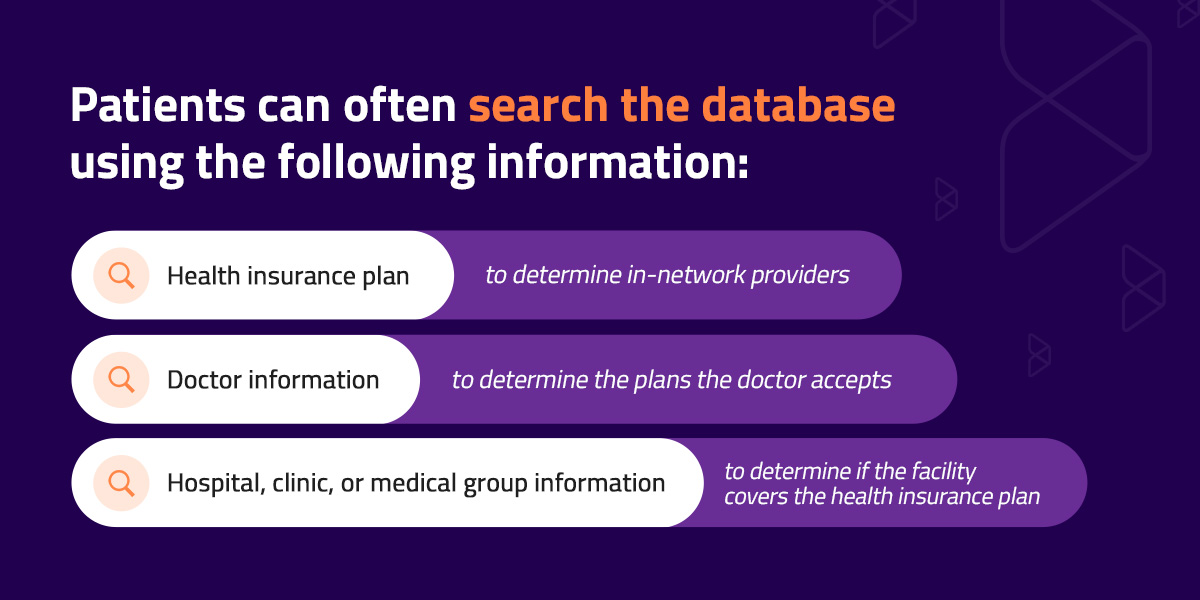
Patients can often search the database using the following information:
- Health insurance plan to determine in-network providers
- Doctor information to determine the plans the doctor accepts
- Hospital, clinic, or medical group information to determine if the facility covers the health insurance plan
Location is often required for all searches. Depending on the lookup tool, patients may access the provider's:
- Full name
- Organization
- Gender
- NPI or atypical provider number
- Service location
- Operation hours
Some lookup tools provide the doctor's availability, supported languages, age groups, and accessibility indicators, such as impairment services.
While these tools offer comprehensive filtering options, their accuracy depends on how frequently the insurance carrier updates the database. Without regularly verifying provider information, even sophisticated search features become unreliable.
Government Lookup Tools
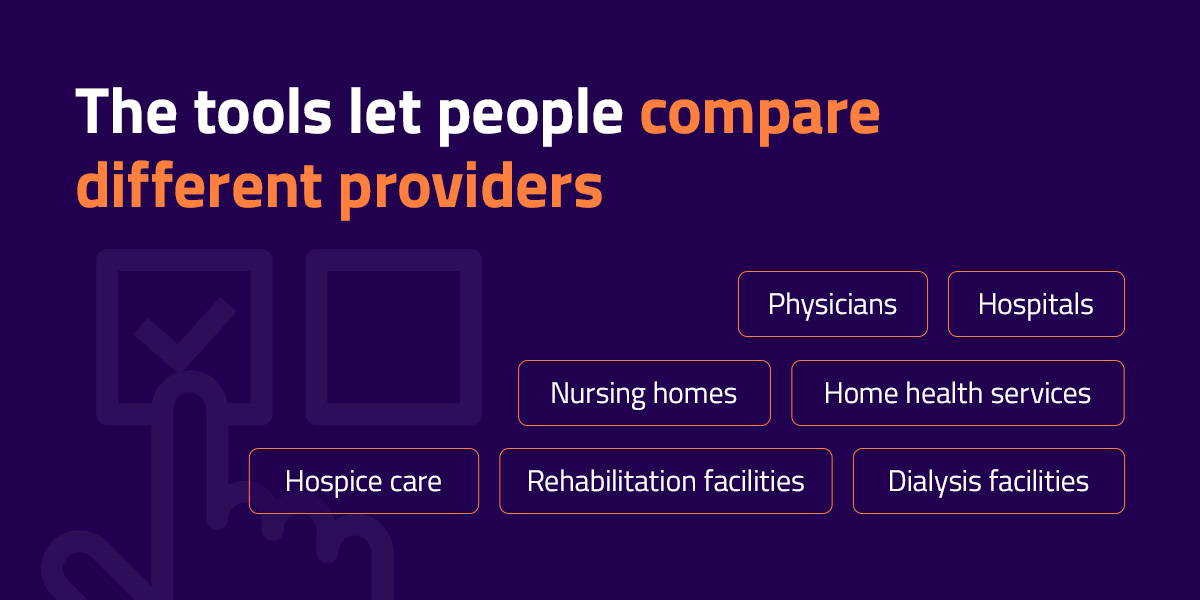
Federal government efforts provide data not tied to specific commercial insurance plans. The tools let people compare different providers, such as:
- Physicians
- Hospitals
- Nursing homes
- Home health services
- Hospice care
- Rehabilitation facilities
- Dialysis facilities
The platforms often offer maps and filters to help patients decide where to get care. However, patients still need to talk to the healthcare provider to confirm the information. Note that star ratings provided by government tools should not be construed as an endorsement.
States may provide their own provider lookup tools. Patients can locate state facilities through maps while offering other healthcare resources. These state-level tools often focus on providers licensed within the state and may include regulatory compliance data not available through commercial insurance directories. However, they may exclude network participation status for specific commercial plans, making them valuable for quality comparisons but less useful for determining provider coverage.
Third-Party Lookup Tools
Third-party provider lookup tools are consumer-facing platforms that often focus on reviews and bookings. Patients and brokers can search providers based on doctor specialization, procedures, location, insurance carrier, or health plan. They can help patients compare real-time availability and book doctors for virtual or in-person appointments. However, these lookup tools don't always have reliable network or quality data. While third-party tools offer convenience and user-friendly interfaces, growing literature has identified substantial directory inaccuracies.
Aggregating data from multiple sources without rigorous verification processes creates reliability problems. Exercise caution when relying solely on third-party directories for network participation information. The appeal of third-party tools lies in their consolidated search experience and patient reviews. However, the convenience factor doesn't compensate for data inaccuracy issues. For important healthcare decisions, you or your clients should still verify information through official insurance carrier channels.
How to Verify if a Doctor Is In-Network
Confirming network participation before scheduling an appointment protects patients from surprise bills and ensures you can provide accurate guidance. Before you recommend coverage to a client, follow these steps to verify provider lookup information:
- Start with the digital tool: Log in to the mobile app or online portal if needed. Type in the location and care type your client needs. Fill in other fields if necessary. Most tools allow you to filter by specialty, patient location distance, and doctor availability.
- Take a screenshot of the results: Depending on the lookup tool, you may see the provider's specialization, services, cost, and performance insights. The best tools highlight doctors who give efficient and effective care and avoid unnecessary treatments. Save this documentation in case disputes arise about network status.
- Call the provider's office to confirm network participation: Ask the receptionist to verify that the doctor is currently accepting the exact insurance plan you're proposing to your client, not just the insurance carrier. Network participation can vary by plan type, even within the same carrier.
- Document who you spoke to and when: Note the name of the person who confirmed the information, the date and time of your call, and any reference numbers the person has provided. Documentation protects your client if the provider later claims they're out of network.
The verification process takes extra time, but it prevents costly mistakes. A five-minute phone call can save patients hundreds or thousands of dollars in out-of-network charges. As a broker, you can also teach clients this verification process to demonstrate value and prevent future complaints about network adequacy.
Why Provider Directory Accuracy Matters
Ghost networks occur when companies list in-network doctors that no longer have contracts to provide negotiated services or no longer provide services in a listed geographic area. These doctors may have also retired, relocated, updated their phone numbers, or closed down their clinics. Failing to update directories results in ghost networks. Misleading provider directories leave plan participants with a false impression about their coverage.
Equally misleading are directories showing no available providers when there is one, which leads to patients opting for out-of-network services that cost more. Employee satisfaction suffers, and lawsuits can follow. For instance, in 2024, a Mayo Clinic employee filed a federal lawsuit after Medica's online search tool improperly omitted in-network mental health providers from the directory. The employee sought care for her teenage son near their Arizona home, believing no in-network providers existed.
This misrepresentation forced the family to use out-of-network providers for several years, resulting in significant healthcare costs. The lawsuit alleged violations of several federal laws, including the Mental Health Parity Act and the No Surprises Act, demonstrating the serious legal consequences of directory inaccuracies.
Clinicians and healthcare facilities are required to inform health plans of changes to their network status or directory information. Timely updates and regular verification are mandated once every 90 days. Despite these requirements, compliance remains inconsistent across the industry. In 2023, an audit of directories from five large national health insurers showed inconsistencies in 81% of entries.
As a result, employers can end up looking elsewhere for their group plans. They may also switch brokers to find those who could recommend plans and carriers with accurate directories.
The Connection Between Provider Lookup Tools and Healthcare Outcomes
An accurate, detailed provider directory makes it easier for patients to find good doctors who can help them achieve better outcomes. Better track records and effective treatments that don't waste time and money make a difference. As patients find quality healthcare providers more efficiently, they're more likely to seek preventive care and address health concerns early.
In contrast, inaccuracies lead to claim denials, delayed care, and health inequities. These effects increase the likelihood of out-of-pocket costs and prevent consumers from accessing their preferred providers. About half of insured adults are unable to resolve insurance coverage issues, with 15% saying they've experienced a health decline due to such issues. The inaccuracies can disproportionately affect vulnerable populations who lack the resources to navigate complex appeals processes or pay for out-of-network care while waiting for reimbursement.
Healthcare providers need to verify their data from different sources, such as licensing boards, medical associations, and the National Plan and Provider Enumeration System database. Verification improves member experience and trust. With accurate directory information, patients can schedule appointments without worrying about surprise billing. As trust in the directory system increases, patients are more willing to explore in-network options rather than defaulting to familiar out-of-network providers.
Additionally, continuity of care is essential for managing chronic conditions. It also helps prevent complications that lead to emergency department visits. With accurate lookup systems, patients are less likely to delay referrals or skip recommended follow-up care due to cost uncertainty.
The Advantage of Tools Leveraging Artificial Intelligence

People seek health information in different ways, depending on whether they intend to learn how to prevent a disease, seek help with a diagnosis, or understand potential health risks. With AI-powered healthcare search, patients and brokers can say goodbye to clunky provider directories and generic online searches. AI technologies can help improve the accuracy of directories, depending on how providers incorporate them. Patients are also more willing to adopt modern healthcare quality tools in their routines, depending on their perceived usefulness.
Advanced healthcare organizations leverage AI with a robust provider data management strategy. They go beyond simple directories to analyze datasets on provider performance. This adaptation mitigates inconsistent information, which erodes patient confidence. If patients lose faith in their plan's directory, they may avoid using it altogether, leading to higher out-of-network utilization rates that increase costs for both the member and the employer.
Healthcare organizations provide AI-powered tools through member portals or mobile apps. A good platform helps patients view top-tier providers in terms of cost and care quality. Features ideally include:
- Unbiased scores based on independent data not tied to insurance networks.
- A list of high-quality, low-cost, in-network providers.
- Doctor comparison features.
How to Tell if the Provider Directory Information Is Accurate
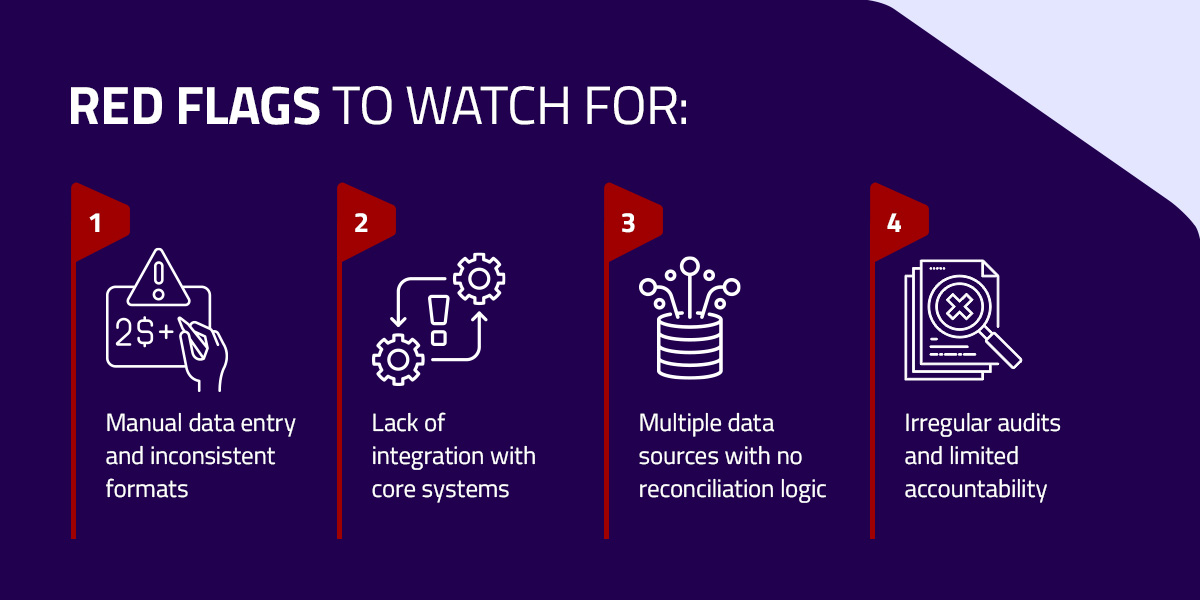
Provider lookup tools need accurate provider names, credentials, specialties, locations, contact information, and network participation status. Red flags to watch for include:
- Manual data entry and inconsistent formats: Directories maintained through labor-intensive processes are prone to human error rather than relying on automated, verified data feeds.
- Lack of integration with core systems: Directory data that doesn't sync with enrollment, claims, and credentialing systems allows inconsistencies to multiply rapidly.
- Multiple data sources with no reconciliation logic: Aggregating provider information from various sources without a process to resolve conflicts creates contradictory entries.
- Irregular audits and limited accountability: Directories that lack routine verification schedules and clear ownership for data quality likely contain numerous errors and outdated information.
Patients and brokers need to cross-reference information from multiple sources. Look for "last updated" dates on directory entries. Be skeptical of sparse or incomplete provider profiles that lack basic information like office hours, languages spoken, or whether the provider accepts new patients.
Most Common Errors in Provider Directories
The most frequent errors that plague provider directories include:
- Wrong phone numbers: Inaccuracies related to contact information are most common and create immediate obstacles for patients trying to access care. Patients waste time and form negative first impressions of both the provider and the insurance plan.
- Incorrect addresses: Patients may arrive at closed offices or wrong locations, creating particular problems for those with limited transportation options or mobility challenges.
- Providers not accepting new patients: Directories showing providers accepting new patients when they're not create false hope and delay care while patients search for available providers.
- Providers listed as in-network when they are not: The most costly error results in surprise bills and financial hardship for patients who believed they were receiving covered care.
- Incorrect specialties: Patients seeking specific expertise may schedule appointments with providers who don't actually offer the needed services, wasting copays, requiring additional appointments, and delaying treatment.
What a Data-Driven Solution Looks Like
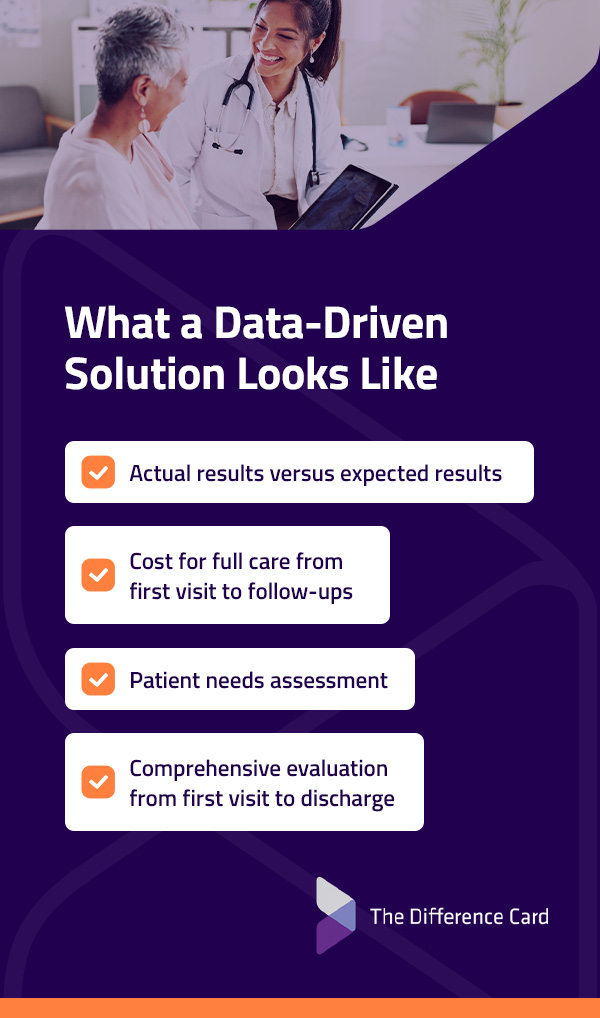
The ideal tool uses an unbiased and robust database, operates independently of any single insurance carrier, and measures quality by outcomes and cost. A good data-driven solution should include:
- Actual results versus expected results: Measuring whether providers deliver better or worse outcomes than predicted based on patient characteristics and conditions.
- Cost for full care from first visit to follow-ups: The total cost reveals which providers deliver efficient care versus those who generate unnecessary additional visits and procedures.
- Patient needs assessment: Quality tools consider whether the care delivered actually addresses the specific health concerns that brought the patient in.
- Low-value care identification: Tracking avoidable emergency room visits and treatments people don't need helps identify providers who practice defensive medicine or over-treat.
- Comprehensive evaluation from first visit to discharge: Tools that consider the full patient experience can identify patterns that simple directory listings miss.
Rates differ per provider and location, but they don't correlate to quality or outcomes. Even within a high-performing healthcare system, an individual provider can still underperform. Most rating systems are simply opinions and not based on data or patient results. With significant data, provider lookup tools should provide scores for quality, appropriateness, cost, and performance insights.
Frequently Asked Questions
To fully understand provider lookup tools and why their accuracy matters, consider the following common questions and their answers:
Can I Be Billed for Out-of-Network Care if the Provider Directory Was Wrong?
The No Surprises Act offers important protections against surprise billing. Surprise billing occurs when patients receive care from an out-of-network provider or facility and get billed for costs their plan doesn't cover. This billing can happen even when patients thought they were seeing an in-network provider based on the plan directory. The Act shields patients from surprise bills for most emergency services, certain nonemergency services at in-network healthcare facilities, and care from out-of-network air ambulance providers. The law also protects patients from payment disputes between providers and insurers.
If the directory showed incorrect information and your client received care believing the provider was in-network, they may have grounds to dispute the bill under this federal protection.
Can You Negotiate With an Out-of-Network Provider?
Each insurance plan has its own rules for out-of-network reimbursements. Some insurers cover a percentage of out-of-network costs, while others use a Usual, Customary, and Reasonable (UCR) model to calculate payments. Your client can negotiate with out-of-network providers before or after receiving care. Many providers work with patients to reduce charges or create payment plans, especially if the patient can demonstrate that inaccurate directory information led them to the doctor's practice.
What Are the Top 5 Denials in Medical Billing?
The top five reasons for denials include:
- Missing or incorrect patient information: Claims get rejected when names, birth dates, insurance ID numbers, or addresses don't match the insurer's records exactly.
- Incorrect patient eligibility or coverage: Denials occur when coverage has lapsed, the patient isn't listed on the policy, or the service date falls outside the coverage period.
- Duplicate claims: Insurers reject claims that appear to be copies of previously submitted claims, even if the original claim was denied or is still processing.
- Lack of prior authorization: Many procedures and specialist visits require approval before treatment, and claims submitted without this authorization get denied automatically.
- Invalid or unsupported procedures: Claims fail when procedure codes don't match diagnosis codes or when the treatment isn't covered under the patient's specific plan.
Many of these denials stem from outdated or inaccurate provider directory data. When directories contain errors, patients may unknowingly see out-of-network providers, leading to coverage-related denials that could have been prevented with accurate provider lookup tools.
Ensure Access to Accurate Provider Directory With The Difference Card
Finding quality healthcare providers shouldn't require guesswork. The Difference Card's Provider Lookup Manager (PLUM) gives brokers and members access to a data-driven solution that measures provider performance based on actual patient outcomes and cost. PLUM showcases doctors who provide efficient and effective care — avoiding unnecessary tests and treatments to save patients' money. Members access unbiased scores independent of any insurance networks.
For over 25 years, The Difference Card has helped organizations build cost-effective healthcare plans with an average net savings of over 18%. Our guaranteed health insurance savings come without reducing employee benefits. With claims processed within two business days and a dedicated account manager for each client, we deliver both savings and exceptional service. Request a proposal today and discover how PLUM can enhance your clients' healthcare experience.