
FSA Use-It-or-Lose-It Rule: Carryover, Grace Period, and What to Know

Key Takeaways A Quick Summary
Key Takeaways
- The FSA use-it-or-lose-it rule requires that money contributed to a health FSA be used within the plan year or be forfeited; in 2023 about half of FSA holders forfeited funds (avg. $436).
- Forfeited FSA funds return to the employer and are typically used to offset plan costs or occasionally redistributed to participants, not sent to the IRS.
- Employers may offer one of two IRS-permitted exceptions to avoid forfeiture: a carryover (rolls up to a dollar limit into the next plan year) or a grace period (gives up to 2.5 months after year-end to spend prior-year funds); they cannot offer both and may offer neither.
- For 2026 the FSA carryover limit is $680; carryover applies only to health FSAs (not DCFSA) and can affect HSA eligibility unless carried into a Limited Purpose FSA that only covers dental/vision.
- Employees should confirm which option their plan offers, know plan-year and grace-period deadlines, review carryover amounts when enrolling, and plan eligible spending (appointments or supplies) to avoid forfeiture.
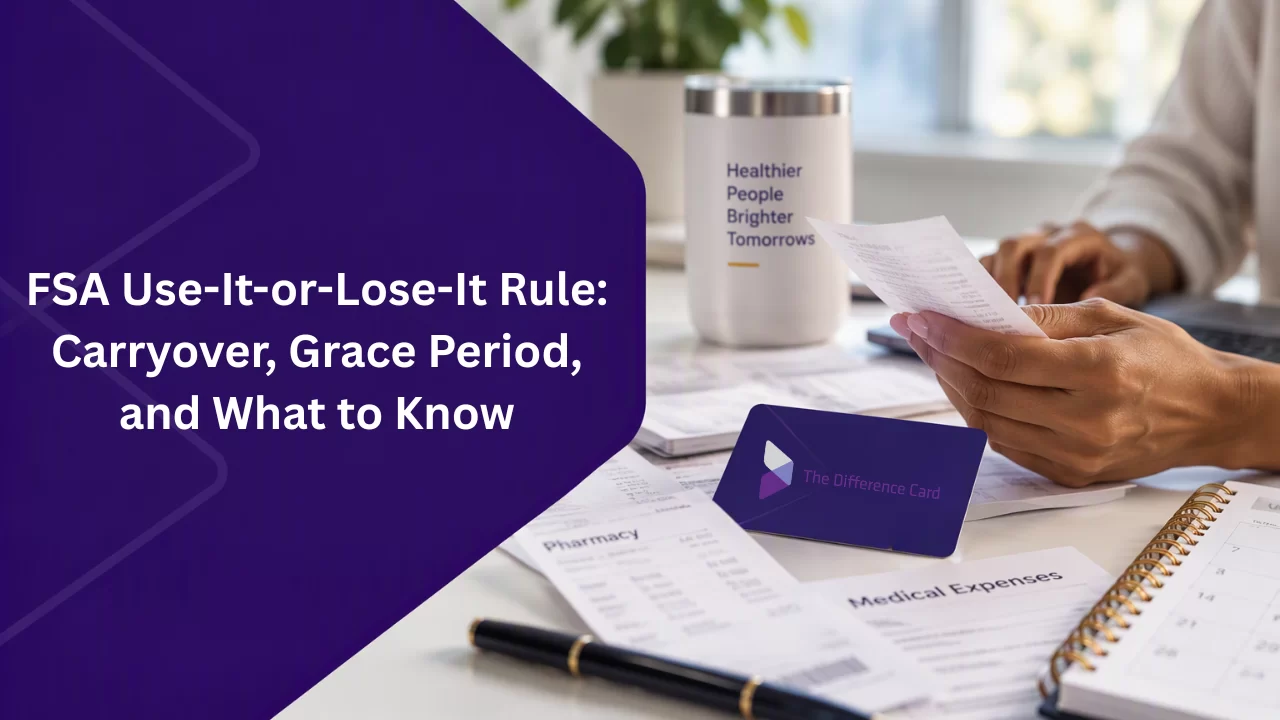
As your plan year wraps up, you might be thinking about the money sitting in your flexible spending account (FSA). If you haven't spent it all, will you lose it? It's a common concern. Many FSA holders are familiar with the use-it-or-lose-it rule. You need to use your funds within the plan year, or you'll forfeit them. In 2023, half of FSA account holders forfeited funds, averaging $436.
The good news? The strict use-it-or-lose-it rule has exceptions. Depending on how your employer structures the plan, you may have more time or flexibility with your unused funds than you realize. This guide explains what the FSA use-it-or-lose-it rule is, exceptions such as carryover and a grace period, and what both employees and employers need to know to make the most of an FSA.
What Is the FSA Use-It-or-Lose-It Rule?
The use-it-or-lose-it rule is a federal requirement for flexible spending accounts. Under IRS rules, any money you put into an FSA must be used within your plan year, or you lose it. Unused balances don't automatically roll forward to the next year.
This rule exists because federal tax regulations require FSA funds to be used for current healthcare costs within the plan year, ensuring these accounts provide immediate support when you need care.
The rule applies to a health FSA, and if you have unused funds at the end of your plan year, you lose those dollars. Most plan years run 12 months, typically following a calendar year starting from January 1 through to December 31, though some employers use different dates.
The IRS cafeteria plan regulations outline these requirements.
Where Do Forfeited FSA Funds Go?
When you forfeit FSA funds, that money goes back to your employer rather than to the IRS or a government fund.
Employers usually use forfeited money in one of two ways:
- Offset FSA plan costs: The forfeited funds help cover the cost of running the FSA program.
- Redistribute to plan participants: In some cases, employers may return a portion of forfeited funds to employees enrolled in the plan.
How your employer uses forfeited funds depends on how they've set up the plan. In most cases, you won't get your individual forfeited amount back.
The IRS cafeteria plan rules confirm that forfeited funds return to the employer.
Are There Exceptions to the FSA Use-It-or-Lose-It Rule?
Yes, and understanding these exceptions can help you avoid forfeiting funds. The IRS allows employers to choose one of two options that give employees more time or flexibility with unused funds.
Keep in mind that neither option is automatic, and your employer must choose to offer one in their plan documents. If your employer doesn't include either option in the plan, the strict use-it-or-lose-it rule applies with no exceptions.
The two IRS-permitted relief options are:
- Carryover: Rolls unused funds into the next year, up to an annual dollar limit.
- Grace period: Extends your spending deadline by up to 2.5 months after the plan year ends.
Employers can offer one option or the other, but not both. Some choose to offer neither, keeping the standard use-it-or-lose-it rule in place.
How the FSA Carryover Works
The carryover option lets you roll a limited amount of unused health FSA funds into the next plan year. If your employer offers this option, any funds you carry over are available right away at the start of the new plan year, with no separate deadline. FSA carryover rules apply only to a health FSA and don't work for Dependent Care FSA (DCFSA) accounts.
Introduced in 2013 as an alternative to the grace period, the FSA carryover increases to keep up with inflation, along with other FSA contribution and carryover limits.
What Is the 2026 FSA Carryover Limit?
For plan years beginning in 2026, the maximum carryover limit is $680, up from $660 the previous year, according to IRS Revenue Procedure 2025-32. The FSA contribution cap for 2026 is $3,400, which means the carryover limit represents 20% of what you can contribute annually.
When you have more than $680 in unused funds, the excess will be forfeited even if your employer offers a carryover. Planning ahead can help you avoid losing money, so review your current healthcare spending patterns to estimate your needs for the coming year.
For those enrolled in a high-deductible plan paired with a Health Savings Account (HSA), carrying over funds in a general-purpose FSA can affect your HSA eligibility. Some plans address this by allowing carryover funds to roll into a Limited Purpose FSA (LPFSA). An LPFSA covers only dental and vision expenses, which keeps your full HSA eligibility intact. Contact your plan administrator if this applies to you.
Do FSA Carryover Funds Expire?
Carried-over funds don't have a separate deadline and become part of your balance in the new plan year, following the same FSA rollover rules as any other funds in your account.
This is an important difference from the grace period, where funds do have a hard deadline. With carryover, your rolled-over balance stays available throughout the entire new plan year.
When you don't re-enroll in an FSA for the next plan year, carryover rules may be different depending on the plan. Confirm with your plan administrator or HR representative to understand how this works for your specific plan.
In most cases, a carryover happens automatically, but re-enrollment requirements can vary. It's worth reviewing your plan details and any changes to your FSA during open enrollment to ensure you understand how your plan works.
How the FSA Grace Period Works
Instead of rolling money forward, the FSA grace period gives you extra time to spend your remaining balance. The IRS allows employers to give you up to 2.5 extra months after the plan year ends, and during this time, you can spend money from your prior year's balance on new eligible expenses.
Introduced in 2005, the grace period became the second option employers can choose instead of the strict use-it-or-lose-it rule. While it extends your spending window, it still requires you to use the funds within that time frame. Once the extended period ends, any remaining balance is forfeited.
The grace period applies to both health FSA and DCFSA, unlike carryover, which applies only to health FSA.
One common confusion is the difference between a grace period and a run-out period. A run-out period only covers claims for expenses you already had during the plan year, while the grace period goes further by allowing you to have brand-new eligible expenses after your plan year ends and pay for them with your prior year's balance. Many people confuse the two, but they work differently.
How Long Is the FSA Grace Period?
The IRS allows a grace period of up to 2 months and 15 days after your plan year ends.
For a calendar-year plan that runs from January 1 through December 31, the grace period ends on March 15. Any eligible expenses you have during this window can be paid from your prior year's balance.
Your employer sets the exact length. The 2.5-month window represents the maximum allowed by the IRS, so employers may offer shorter periods or no grace period at all, depending on how they've designed the plan.
Keep in mind that not all employer FSA plans run on a calendar year. Some plans follow a fiscal year, like July 1 through June 30. If your plan year ends on a different date, your grace period deadline changes.
For the exact deadline of your plan, go through your FSA documents or contact your HR representative to confirm. You can also check this information during your open enrollment period when planning your contributions for the next plan year.
What Can You Spend During the Grace Period?
During the grace period, you can use your remaining prior-year FSA balance on any eligible FSA expenses you have. These don't have to be costs you've planned for in advance.
The grace period uses the same eligible expenses as the regular plan year, including common healthcare costs like copays, prescription medications, medical equipment, and certain over-the-counter items.
Differences Between FSA Grace Period vs. Carryover
When comparing the FSA grace period vs. rollover options, here are the key differences.
| Feature | Carryover | Grace Period |
|---|---|---|
| How funds are treated | Moves money forward with no separate deadline | Gives extra time to spend, but with a hard deadline |
| Dollar limits | Dollar cap of $680 for 2026 | No dollar cap, but time limit of up to 2.5 months |
| Which accounts qualify | Health FSA only | Both health FSA and DCFSA |
| Plan restrictions | Employer can offer carryover OR grace period, but not both | Employer can offer grace period OR carryover, but not both |
You can't choose which option your plan uses, as that decision belongs to your employer. Understanding which option your plan offers helps you plan your spending accordingly.
The FSA carryover limit for DCFSA doesn't exist because carryover is not allowed for those accounts. To understand and compare your account options more broadly, consider talking with your benefits team about which approach best fits your needs.
How Employers Choose Between a Carryover and a Grace Period
To offer either option, employers need to update their plan documents.
Employers usually look at several factors when deciding which option to offer:
- Administrative effort: Some employers find choosing a carryover is easier to manage because it doesn't require tracking a separate deadline. Others prefer the simplicity of a grace period with a clear end date.
- Clear communication: Grace periods require clear communication about deadlines so employees know when to use remaining funds. A carryover may need fewer reminders but can lead to questions about re-enrollment.
- Healthcare cost predictability: Carryover helps employers better predict costs in the new plan year since carried-over funds become part of the employee's total balance. Grace periods concentrate use in a short window, which can be harder to forecast.
- Workforce demographics: Younger employees or those new to an FSA may benefit from the extra time a grace period provides. Employees with steady healthcare costs may prefer a carryover.
- HSA compatibility: Employers who offer both an FSA and a high-deductible health plan with an HSA should know that employees with FSA carryover balances may not be able to contribute to an HSA in the next plan year, unless the plan designates carryover as a Limited Purpose FSA.
Employers making this decision should work with their plan administrator or benefits consultant to determine which option best fits their workforce. You may also want to review recent FSA changes that could affect your plan design decisions. Understanding the tax benefits of offering an FSA can also help you weigh the overall value for your organization.
When setting up the carryover option, talk with your plan administrator about structuring it so it doesn't block HSA-eligible employees.
What to Do Before Your FSA Funds Expire
Taking a few practical steps can help you make the most of your FSA and avoid leaving money on the table.
- Find out which option your plan offers: Check your Summary Plan Description, your benefits portal, or ask your HR representative or plan administrator whether your plan includes a carryover, grace period, or neither.
- Know your deadlines: Confirm your plan year-end date and, if possible, your grace period deadline. Mark these dates on your calendar and set reminders at least 30 days before each deadline to give yourself time to plan.
- Review the carryover amounts: Confirm how much will roll forward and plan your contributions during your open enrollment period. Factor in your carryover balance when deciding how much to contribute for the new year to avoid over-funding.
- Plan your spending: Spend your remaining funds on eligible expenses before the deadline. You can do this by scheduling routine healthcare appointments or stocking up on eligible items you'll need throughout the year.
Statistically, younger workers are more likely to forfeit funds, so checking your balance regularly is especially important when you're new to using an FSA.
Whether your employer offers relief options or follows the strict use-it-or-lose-it rule, staying informed about your FSA plan year and deadlines helps you make the most of your healthcare dollars.
Get Started With The Difference Card
Since 2001, The Difference Card has helped organizations build cost-effective, employee-friendly healthcare benefit plans, including FSA administration.
Whether you're an employer evaluating carryover versus grace period options, or looking for a benefits partner who can explain complex rules in simple terms, The Difference Card brings expertise and clarity to the process. Our clients see an average net savings of 18% on annual health insurance costs, all without reducing employee benefits.
We help you design benefits that work for your workforce. From The Difference Card's FSA administration to broader benefits strategy, our team is here to support you.
Ready to learn more? Contact us to explore how we can help your organization save on healthcare costs while offering the benefits your employees value.