

HSA vs. FSA: Which Is Right for You?
Table of Contents
Both a health savings account (HSA) and a flexible spending account (FSA) offer excellent benefits. The accounts provide an opportunity to pay for healthcare with pretax dollars, making it easier for employees to access the care they need.
However, the choice you offer your employees comes with eligibility requirements based on various factors. Explore the differences between HSA and FSA options, including their benefits, potential downsides, and essential criteria for making the best decision.
What Is a Health Savings Account?
An HSA is a savings account specifically for people with a high-deductible health plan (HDHP). It allows people to save pretax money and withdraw it tax-free to pay for qualified medical expenses, such as copays, prescriptions, glasses, dental care, and some over-the-counter purchases.
HSA Eligibility Requirements
For an employee to be eligible for an HSA, they must follow the criteria below:
- Employees must be currently enrolled in an HDHP on the first day of the month.
- Employees must have no other healthcare coverage plan.
- Medicare coverage cannot be in place.
- Employees must not be claimed as a dependent on another person's tax return.
Eligible spouses must open their own individual HSA.
Why Choose an HSA Plan?
If an employee is in good health overall and makes regular contributions to their HSA, they can accumulate a sizable amount of money to cover unexpected or emergency medical expenses.
What Is a Flexible Spending Account?
An FSA is compatible with all healthcare insurance plans, but is only available if employers offer it as part of their benefits packages. Like an HSA, it allows pretax contributions and withdrawals for qualified medical expenses.
FSA Eligibility Requirements
To qualify for an FSA, employees must:
- Work for a company that offers an FSA plan.
- Enroll during the open enrollment period, which is usually between November and December.
- Employees must reenroll annually to maintain their accounts.
Why Choose an FSA Plan?
FSA plans may better suit some employees based on:
- Family healthcare expenses: Especially useful for working parents, an FSA plan helps employees pay for healthcare costs for their families. An FSA is a good option for families who regularly seek medical treatment and make doctor appointments.
- Minimal healthcare costs: Aside from families, single employees may prefer an FSA plan if their expenses are minimal. For example, an individual may only require a new pair of glasses or a visit to the dentist.
HSA vs. FSA Comparison: What Are the Differences?
Before settling on a single plan type, evaluate the key differences between the two plans to determine which one will benefit your employees the most. Flexibility of funds is a key difference between an HSA and an FSA. Other differences include the following:
Contribution Limits
The Internal Revenue Service (IRS) does not have minimum contribution requirements for these accounts. However, there are maximums. Employee and employer contributions count toward the maximum contribution limits.
The IRS limits the contribution amount for an HSA depending on the coverage. The 2026 limits are as follows:
- Self-only coverage: $4,400
- Family coverage: $8,750
Employees 55 and older can contribute an additional $1,000 in catch-up contributions.
With an FSA, the IRS contribution limit for 2026 is $3,400, but employers may set a lower, plan-specific limit. Employers may allow employees to carry over a maximum of $680 in unused savings to the following year.
Plan Ownership
Account ownership is a significant difference between an HSA and an FSA. If an employee changes jobs, they retain ownership of their HSA plan. Funds are portable, and employees can continue contributing with their new employer. Even after employees retire, they still have access to their HSA funds.
An FSA plan limits employees' flexibility to transfer these funds should they leave for another employer. Access to an FSA ends when the employee leaves your company. Employers own FSA plans, and you can determine how to use any unused funds.
Growth and Investment
A key difference between an HSA and an FSA is the opportunity to grow funds. With an HSA, your employees can invest their money after meeting a threshold amount. Then, they can use tax-free investment earnings to pay for eligible expenses.
With an FSA plan, your employees cannot invest their funds. Funds cannot generate interest, and they must spend the money within a particular time frame.
Reimbursement and Fund Access
Accessing HSA and FSA plan funds is another considerable difference. With an HSA plan, employees can only spend or claim reimbursement for healthcare expenses up to the actual amount in their accounts. An FSA allows employees to access the full annual contribution amount from the start of the plan each year, even if payroll deductions haven't yet added the full amount to the account.
The Benefits of HSA and FSA Plans
Although there are distinct differences between HSA and FSA plans, both options provide security to cover healthcare expenses, particularly during unexpected moments. The different benefits of HSA and FSA options will help you determine the best fit for your employees:
Benefits of an HSA
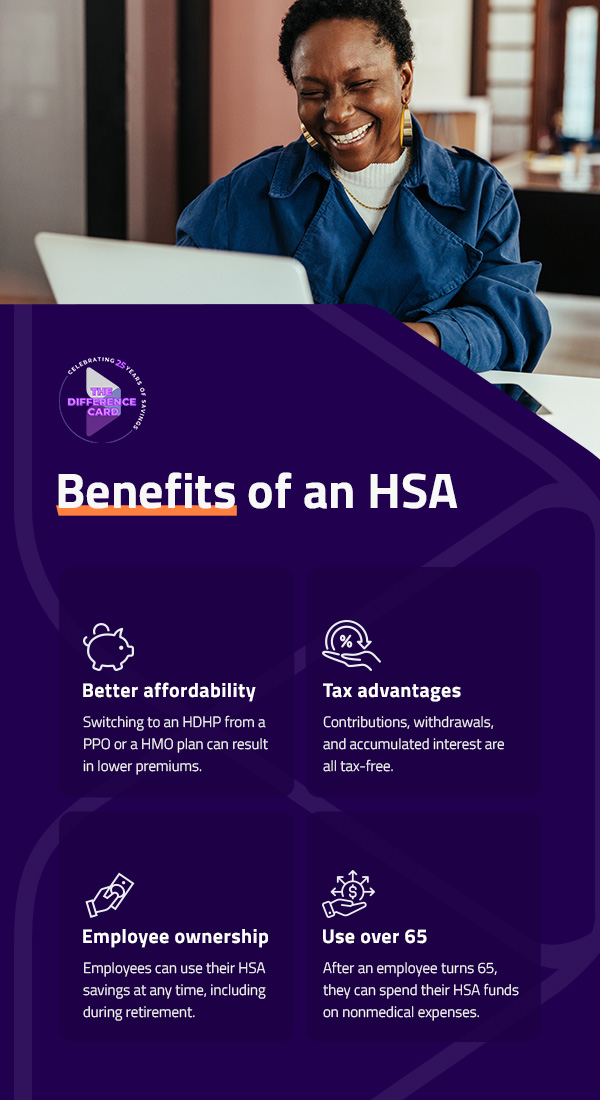
Here are the key HSA benefits to consider:
- Better affordability: Along with an HDHP, an HSA can help make healthcare more affordable. Switching to an HDHP from a preferred provider organization (PPO) or a health maintenance organization (HMO) plan can result in lower premiums. Employees also enjoy tax benefits and additional savings from employer contributions.
- Tax advantages: Opening an HSA comes with significant tax benefits. Contributions, withdrawals, and accumulated interest are all tax-free. Employees greatly benefit from these tax advantages, particularly when medical costs rise. Employers also see tax advantages since contributions lower their taxable payroll.
- Employee ownership: Even if an employee leaves your business, they can keep their HSA, and funds roll over from year to year. Employees can use their HSA savings at any time, including during retirement.
- Use over 65: After an employee turns 65, they can spend their HSA funds on nonmedical expenses, but they will owe income tax on the amount. Medical expenses continue to be tax-free.
Benefits of an FSA
Explore the following FSA benefits:
- Combine with low-deductible plans: Eligibility for an FSA is possible even if your employees have low-deductible healthcare plans. FSA plans allow pretax savings and reimbursement without an HDHP.
- Tax advantages: Like an HSA, an FSA enables your employees to reduce their taxable income through pretax contributions, and employer FSA contributions reduce taxable payroll.
- Potential run-out periods: As an employer, you can offer a run-out period that allows your employees to claim reimbursement for medical expenses after the plan year has finished. Additionally, the window helps your employees to gather evidence that has been subject to delay. The run-out period typically lasts up to 90 days.
Which Is Better: HSA or FSA?
With healthcare plans, there is no one-size-fits-all approach. The benefit of offering various plans is to cater to employees and their families as they navigate their unique medical journeys. Having options also allows you to find a flexible solution and balance your business needs.
Before making your final decision, consider the following checklist:
- HDHP offering: Remember that HSA plans are only available to employees with a qualifying HDHP. With an FSA, there is more flexibility regarding the health insurance plan.
- Long-term savings: Determine whether your workforce prefers the benefit of long-term savings or the short-term advantages of an FSA plan. With an HSA plan, your employees will not have to worry about losing any unused funds in their accounts. An HSA allows all funds to roll over continuously. An FSA is more restrictive, with a time limit on using funds and a cap on the amount that can roll over.
- Simple administration: The administration of HSA and FSA plans differs. Because employees own their HSA, they are responsible for managing the funds and maintaining the accounts. By offering an FSA plan, employers have an obligation to remind employees of reenrollment each year.
- Encourage investment: Whereas an FSA plan is beneficial for short-term medical expenses, an HSA engages your workforce to think about why saving for future healthcare expenses pays off. Particularly if an employee is rarely unwell, having a safety net in place for unexpected events reinforces the need to invest in healthcare.
- Offer flexibility: With an HSA plan, employees can confidently invest and keep their accounts, even if they retire or move to another company. Employers own FSA plans, so when an employee leaves the business, any unused funds return to you.
FAQs
The following is a list of answers to common questions not already answered above:
Can Employees Have an HSA and an FSA?
Generally, IRS regulations disallow having an HSA and an FSA at the same time. However, there is an exception — employees can have both an HSA and a Limited-Purpose FSA (LPFSA) for dental and vision expenses.
Who Can Make HSA Contributions?
Aside from employers and employees making contributions, anyone can contribute to an individual's HSA plan. Total contributions to an HSA must still follow the IRS limitations. Contributions from all parties reduce the account holder's taxable income.
What Is Considered a Qualified Medical Expense?
Under the IRS code, various qualified medical expenses may include over-the-counter medications, prescription drugs, and diagnostic tests used to determine the presence of an illness. The IRS definition of qualified medical expenses applies to HSA and FSA accounts.
How Are Expenses Reimbursed With an FSA?
Your employees will have to submit an expense claim for reimbursement of medical costs. With each claim, your employee must show proof, such as receipts. After the submission, your employee will receive the total reimbursement claim amount.
What Is the HSA Reimbursement Process?
Reimbursement for an HSA is different. Instead of submitting a claim, employees use a debit card linked to their account to pay for expenses. However, employees must also keep proof of medical costs.
Expenses incurred before opening an HSA are ineligible for reimbursement.
Is There a Process for Contributing Too Much to an HSA?
Contributions exceeding IRS limits are subject to income tax and an additional 6% excise tax every year until corrected. HSA owners can correct the error by withdrawing the funds and any earnings or rolling them over to count toward the next year's contributions.
Can Employees Transfer HSA Funds to an IRA?
Under IRS regulations, employees cannot transfer their HSA funds to an individual retirement account (IRA). Both account types abide by different sections of the IRS code, which makes the transfer of funds impossible.
What Are the Deadlines for Spending HSA and FSA Funds After Incurring Expenses?
Employees must incur medical expenses while accounts are in place to receive reimbursement through either an HSA or an FSA. If an employee owns an HSA, they have complete flexibility to reimburse themselves at their convenience.
With an FSA plan, reimbursements must occur within the plan year.
Discover How The Difference Card Helps Save More
Despite the differences, an HSA or FSA plan for your employees is a valuable component of your employee benefits package. By offering a unique opportunity to invest in future healthcare needs or providing immediate support to your team, these plans prioritize employee health and well-being.
With an HSA or an FSA, you may notice a difference in employee morale and retention rates. When you partner with The Difference Card, we can help your employees reduce the burden of healthcare costs, and your business also reaps the benefits.
Ready to learn how The Difference Card benefits your company and your employees' healthcare expenses? Contact us to discuss options today and request your proposal.