

What Is a Level-Funded Health Plan?
Key Takeaways A Quick Summary
Key Takeaways
- Level-funded health plans are a hybrid model combining the budget predictability of fully insured plans with the transparency and savings potential of self-funded plans: fixed monthly payments, access to claims data, and possible surplus refunds if actual claims are lower than estimated.
- Monthly payments are bundled into three components—administrative fee, stop-loss premium, and a maximum expected claims fund—and stop-loss insurance (specific and aggregate) protects employers from large or excessive claims.
- Compared to other models, level-funding sits between fully insured (carrier assumes all risk, no refunds, low admin) and self-funded (employer assumes most risk, high customization and data access); level-funded offers shared risk, moderate flexibility, full claims transparency, and moderate administrative burden.
- Level-funded plans work best for small to midsized employers (roughly 25–300 employees) with relatively healthy workforces, stable cash flow, a desire for cost control, and the willingness to use claims data for benefit decisions.
- Key drawbacks and considerations include renewal risk after high-claims years, employer liability to fund claims, underwriting requirements, administrative capacity needs, and the option to pair level-funding with a MERP to lower employee out-of-pocket costs and overall benefit spend.
A level-funded health plan is a hybrid model that combines the best features of traditional insurance with modern cost-control strategies. You get the financial protection and predictable monthly payments of a fully insured plan, plus the flexibility and potential savings of a self-funded approach. Instead of paying premiums to your insurance carrier and hoping for the best, you gain transparency into your healthcare spending.
This model matters now more than ever. Health insurance premiums keep climbing, pushing employers to make difficult choices about employee benefits. The average premium for family coverage increased 6% in the last year and 26% over the last five years. That steady rise has many employers searching for alternatives.
Level-funded plans are a solution. Understanding these plans compared to traditional fully insured and self-funded options helps you make a confident, cost-effective decision for your business.
Understanding the Level-Funded Hybrid Model
Level-funded health insurance blends two traditional approaches into a single, more flexible option. You make consistent monthly payments similar to traditional insurance, but gain access to your own claims data and the possibility of getting money back if your employees use less healthcare than projected.
Level-funded plans have become popular among smaller organizations because employers can reduce healthcare expenses while maintaining high-quality coverage for employees. Rather than handing over premium dollars to health insurers with no visibility into spend, you can see exactly what drives costs within your organization.
The 3 Funding Models Compared
Level-funded health plans fall between traditional and self-funded health insurance funding options. Three main models exist, each with distinct characteristics regarding who bears financial risk, how much flexibility you have, and what your monthly costs look like.
| Feature | Fully Insured | Level-Funded | Self-Funded |
|---|---|---|---|
| Monthly Costs | Fixed premium | Fixed payment | Variable based on claims |
| Financial Risk | Carrier assumes all risk | Shared risk with stop-loss protection | Employer assumes risk up to stop-loss threshold |
| Cost Savings Potential | None (no refunds) | Moderate (surplus refunds possible) | High (pay only actual claims) |
| Plan Customization | Limited (standardized plans) | Moderate flexibility | Complete customization |
| Claims Data Access | None | Full transparency | Full transparency |
| Administrative Burden | Low (carrier manages) | Moderate (TPA assistance) | High (requires TPA and compliance management) |
| Best For | Risk-averse employers | Small to midsized businesses seeking balance | Larger employers with healthy workforces |
1. Traditional Fully Insured Plans
This is the traditional model most people think of when they hear "group health insurance." You choose a plan from an insurance carrier, pay a fixed monthly premium, and the carrier assumes 100% of the claims risk. Whether your employees have a healthy year or experience significant medical events, your premium stays the same.
Traditional fully insured plans are characterized by:
- Predictable costs: You know what you'll pay each month for your plan, making budgeting easier.
- Low administration: The carrier manages claims processing, maintains compliance, and handles most of the administrative tasks.
- Less flexibility: Plans are standardized, limiting customization of your coverage or benefits.
The main advantage is simplicity and security. You pay your premium, and the insurance carrier manages everything else. One drawback is cost. Because the carrier assumes all risk, premiums tend to be higher. If your employees have a healthy year with low claims, the carrier keeps all unused premium dollars, and you receive no refund or credit toward future coverage.
2. Self-Funded Plans
At the opposite end of the spectrum, self-funded plans put the employer in the role of insurance carrier. Rather than paying premiums to a carrier, you pay for your employees' medical claims directly. Many employers work with a third-party administrator (TPA) to process claims and manage day-to-day operations. Stop-loss insurance provides additional protection against claims.
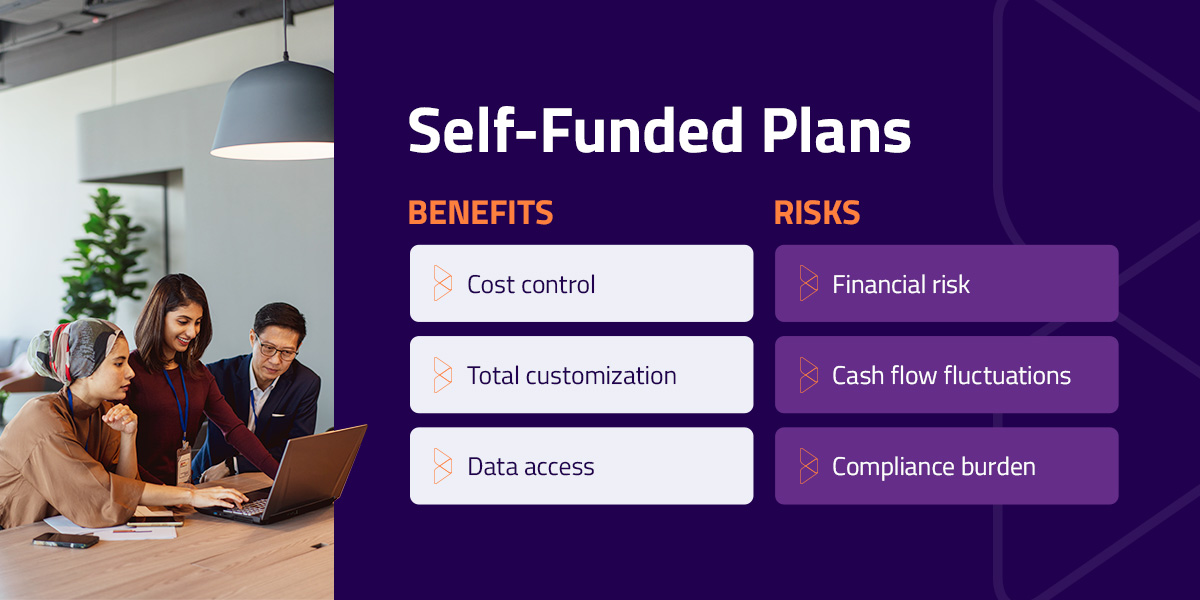
A self-funded plan offers various benefits, such as:
- Cost control: You only pay for claims that happen and the admin fees, saving you money over time with low utilization.
- Total customization: You design the plan to fit your workforce's specific needs without carrier restrictions.
- Data access: You see detailed claims information, helping you make data-backed decisions about wellness programs and plan design.
There are also some risks, including:
- Financial risk: You're responsible for paying all claims up to your stop-loss threshold, which can strain cash flow.
- Cash flow fluctuations: Monthly costs can change with employee healthcare utilization, making budgeting more complex.
- Compliance burden: You must navigate regulations and other federal requirements on your own.
The U.S. Department of Labor regulates self-funded health plans under the Employee Retirement Income Security Act (ERISA), which exempts them from many state insurance laws. This difference can give you more flexibility, but it can also increase your compliance responsibilities.
3. Level-Funded Health Plans
Level-funded insurance sits right in the middle, capturing the savings potential of self-funding while maintaining the budget predictability of traditional insurance. Your monthly payment stays consistent, just like with fully insured coverage. But unlike traditional insurance, you gain transparency into your claims data and share in any leftover funds at the end of the year.
The following benefits of level-funded plans are what make them popular:
- Cost savings: You can lower your annual healthcare spending compared to fully insured premiums, especially with a healthy workforce.
- Risk protection: Stop-loss insurance lowers your financial risk from unexpected claims.
- Data transparency: Claims data helps you pinpoint what drives costs up and allows you to make better plan decisions.
- Regulatory exemption: Level-funded group health plans are also regulated under ERISA, giving you flexibility on benefits.
There are also some drawbacks to keep in mind, such as:
- Renewal risks: A year with high claims can lead to higher renewal rates or difficulty finding coverage.
- Employer liability: You must fund the claims account, so careful financial planning is important.
- Underwriting requirements: Carriers evaluate your workforce's health, and some groups may not qualify for good rates.
How Do Level-Funded Plans Work?
Level-funded health insurance works through three features that provide predictability and even savings.
Fixed Monthly Payments
Your monthly payment covers three components bundled into one amount.
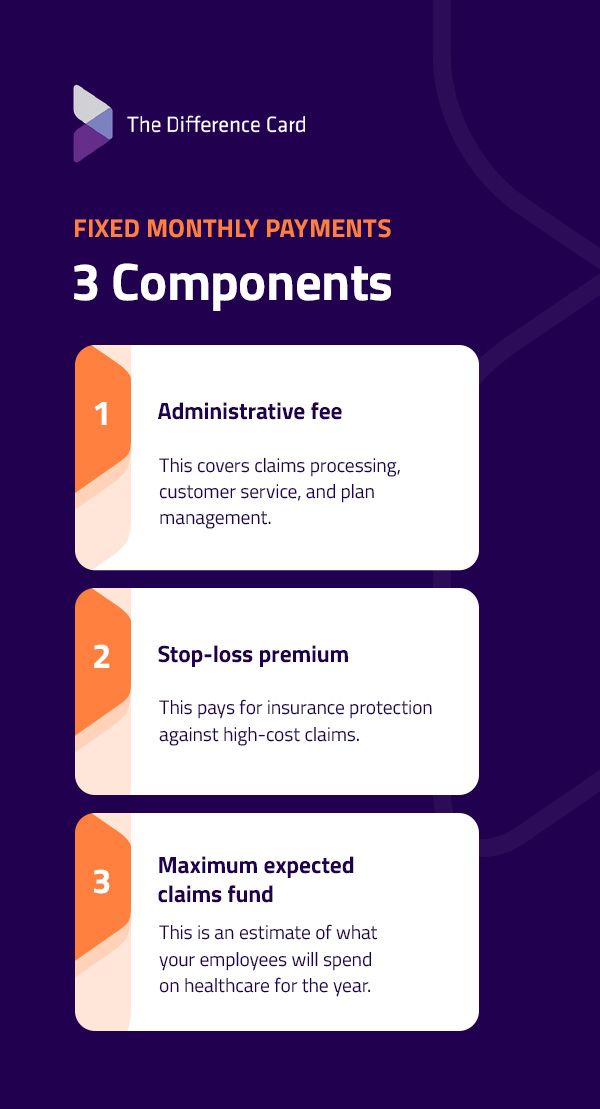
These three components are:
- Administrative fee: This covers claims processing, customer service, and plan management.
- Stop-loss premium: This pays for insurance protection against high-cost claims.
- Maximum expected claims fund: This is an estimate of what your employees will spend on healthcare for the year.
This three-part structure simplifies your budgeting. You know your monthly cost up front and can plan ahead. The difference is what happens at the end of the plan year if your employees' actual medical expenses come in below the estimated claims fund.
Stop-Loss Insurance Protection
Stop-loss insurance is a safety net. It protects you from high claims that could strain your business's finances.
There are two types of stop-loss coverage. First is a specific stop-loss, and it covers individual high-cost claims, like a cancer diagnosis or major surgery. When an employee's expenses exceed a predetermined threshold, the carrier steps in to pay the excess.
The second is aggregate stop-loss. It caps your total claims exposure across your workforce. Should your group's combined claims pass the limit you set, this coverage protects you from the overage.
Data Access and Surplus Refunds
Two major benefits distinguish level-funded plans from traditional insurance:
- Claims data transparency: You get regular reports showing utilization patterns, high-cost conditions, and pharmacy spending trends.
- Potential surplus refunds: Unused funds come back to you as either a direct refund or as a credit toward your next year's premiums, depending on your specific plan.
Surplus refunds are possible, but it's important to remember there's no guarantee. If your workforce experiences a year with high medical plan use, you won't receive any surplus. But your stop-loss protection ensures you won't pay more than your predetermined maximum.
Is Level-Funding Right for You?
Not every organization is an ideal candidate for level-funded health plans. Several factors determine whether this funding model aligns with your business circumstances and goals. Level-funded plans work best for organizations with certain characteristics.
These characteristics include:
- Small to midsized businesses: Companies with 25-300 employees find the most value, though carriers offer options for smaller or larger groups.
- Healthy workforce: Businesses with younger employees or lower-than-average claims history are more likely to see savings and receive surplus refunds.
- Stable financial position: A good cash flow is needed to manage the monthly payments and understand that renewal costs can increase after a high-claims year.
- Desire for cost control: Organizations looking for alternatives to traditional insurance and willing to take a more active role in managing healthcare costs.
- Interest in data-driven decisions: Employers who will actually use claims data to decide on wellness programs and benefit strategies.
For small businesses, there are various affordable health insurance options to suit your budget and needs.
What Employers Should Consider
Before switching to level-funded coverage, you need to remember these important factors:
- Risk tolerance: While stop-loss insurance protects you from expensive claims, you need to be comfortable with some financial uncertainty. A bad claims year can affect your renewal rates.
- Cash flow stability: Unlike fully insured plans, where you can negotiate payment terms, level-funded plans need continuous funding.
- Admin capacity: Consider whether you have staff available to review claims data, work with your TPA or broker on plan adjustments, and help employees understand how the plan works.
Enhancing Your Plan With a MERP
Regardless of which funding model you choose, a medical expense reimbursement plan (MERP) can provide additional cost savings. A MERP works with your primary health plan to help lower out-of-pocket costs for employees, while reducing your overall benefits expenses.
Pairing a high-deductible health plan (HDHP) with a MERP lowers your premium costs while maintaining employee coverage. For a direct MERP and traditional insurance comparison, resources are available that explain the mechanics and potential savings.
A MERP is funded by the employer and reimburses employees for certain medical expenses, tax-free. They can be reimbursed for their deductibles, copays, and prescriptions. This advantage saves you and your employees money, making it a cost-conscious and highly beneficial option.
A MERP can work with fully insured, self-funded, or level-funded plans, complementing them by giving you greater control over benefit design and cost distribution between the employer and employees.
Level-Funded Plan FAQs
These are the questions employers most often ask when evaluating whether level funding makes sense for their organization.
What’s the Difference Between Level-Funded and Fully Insured Plans?

The main differences are in the financial risk and claims ownership. With a fully insured plan, the insurance carrier assumes all the financial risk, retaining any unused premium funds. A level-funded plan allows the employer to take on a portion of the claims risk, meaning if claims are lower than expected, the employer can keep the surplus.
Other than that, both plans use the same doctors, hospitals, and pharmacies. Copays work the same way with identical coverage rules. You also get to see where your money is going each month.
What Happens if We Have a Year With Lots of Medical Claims?
Your costs can increase when it's time to renew, sometimes more than they would with a fully insured plan. If claims are high, the insurance company might not offer you coverage next year because the insurance company looks at what your employees actually spent.
An expensive year can drive up your price the following year. Your stop-loss insurance protects you, but it won't keep your renewal rate low. This is why level funding works best when your team is generally healthy.
Can I See Where My Healthcare Money Goes?
It depends on who you work with. Some companies give you monthly reports that show your total spend, what types of care cost the most, and whether you'll get a refund.
Good reports help you spot problems early and make updates that save money. Changes can include adding a program to help employees manage diabetes or switching to lower-cost prescription options.
Can I Switch Back to Fully Insured if This Doesn’t Work?
Yes, but you have to wait until your contract ends, usually 12 months. You can't switch mid-year unless something unusual happens.
If you switch back after a year with high claims, insurance companies will see that when you apply. You might pay more for fully insured coverage than you would have if you'd never switched. That's why you should think carefully about whether your team is healthy enough for level-funding before you make the jump.
Let the Experts at The Difference Card Guide Your Health Plan Decision
Choosing the right healthcare plan is one of the biggest financial decisions you make as an employer. Level-funded plans offer a solution with predictable budgeting and real savings.
The Difference Card has helped organizations build cost-effective healthcare plans that deliver an average annual savings of 18% without lowering employee benefits. Our team understands each funding model and can help you choose the plan that best matches your business goals and needs. Whether you're exploring level-funding or looking to enhance your current plan with a MERP, we're here to guide you through the process.
Get a free proposal today to get a personalized analysis of your options.