
Future Trends in Healthcare Benefits
Key Takeaways A Quick Summary
Key Takeaways
- Surging healthcare and pharmacy costs are the top employer concern in 2026 — average family premiums reached nearly $27,000 and medical cost trends are rising (~8.5%), driven by medical inflation, high-cost specialty drugs (e.g., GLP‑1s), and increased service use.
- AI is reshaping benefits by improving employee navigation (provider lookup, plan recommendations), automating HR tasks, enabling data-driven decisions, and requiring vendors to prioritize data security, transparency, and explainable recommendations.
- Holistic employee well‑being (mental health, financial wellness, flexible scheduling) is now essential — it directly affects productivity and retention, and employers must make mental health support central to benefits and leadership responsibilities.
- Demand for flexibility and personalization is growing: one‑size‑fits‑all plans are fading in favor of options like flexible work arrangements, family supports, HSAs, Lifestyle Spending Accounts (LSAs), and tailored financial wellness programs.
- Virtual‑first care is expanding beyond telehealth to primary care models that offer cost savings, improved access, and convenience, but require strong care coordination and clear guidelines to avoid overuse and fragmentation.
Healthcare benefits are changing, placing employers in a tough position. With employer-sponsored insurance covering 154 million Americans, benefits are a critical part of employee compensation. Average family premiums reached almost $27,000 in 2025, up 6% from the previous year.
The challenge as an employer? Keeping costs down while staying competitive.
The projected medical cost trend is expected to grow by 8.5%. As healthcare costs rise, so do your employees' expectations for better benefits. It's a complex balancing act to level benefit cost-effectiveness with competitiveness, but there's a solution. Explore healthcare benefit trends for the future and how you can handle them.
Watch These Top 5 Healthcare Benefit Trends in 2026
Knowing the employee benefits trends helps you make smarter business decisions. Each trend is both a challenge and an opportunity to strengthen your benefits offering while controlling costs.
Trend 1: Surging Healthcare and Pharmacy Costs
Managing healthcare benefit costs is an employer's top concern in 2026. You're under pressure to offer competitive benefits and lower costs. National health spending is projected to grow faster than the Gross Domestic Product (GDP) over the next decade, meaning healthcare costs will continue outpacing general economic growth.
The primary drivers behind rising costs include:
- Medical inflation: Healthcare service costs climb annually, from routine checkups to complex procedures. Health provider rates are also increasing while hospitals face their own cost pressures.
- High-cost specialty drugs: New treatments, such as GLP-1 medications for diabetes and weight management, can cost thousands per patient annually, affecting plan budgets.
- Increased service use: Employees are using healthcare services more often to catch up on overdue health checks and access expanded benefits. Pent-up demand from pandemic delays is still affecting claim request volumes.
As an employer, you want to provide employees with quality coverage. But your budget often makes it challenging. Employers explore plan design changes, cost-sharing or alternative funding to manage rising expenses. The key is to find a solution that protects your budget and maintains employee health and morale.
Trend 2: The Role of AI in Modern Benefits
Artificial intelligence (AI) has become a useful tool in healthcare benefits. It reshaped the way employers and employees manage healthcare coverage. AI simplifies navigation, improves HR team efficiency, and drives data-driven decisions that were once impossible.
AI offers various benefits for both your workforce and HR team:
- Employees: AI provides quick access to provider lookup tools, instant answers to coverage questions, and personalized plan recommendations based on their healthcare needs and financial situation.
- HR teams: AI streamlines HR processes by automating routine tasks, providing insights from utilization data, and detecting issues before they escalate into costly claims or compliance failures.
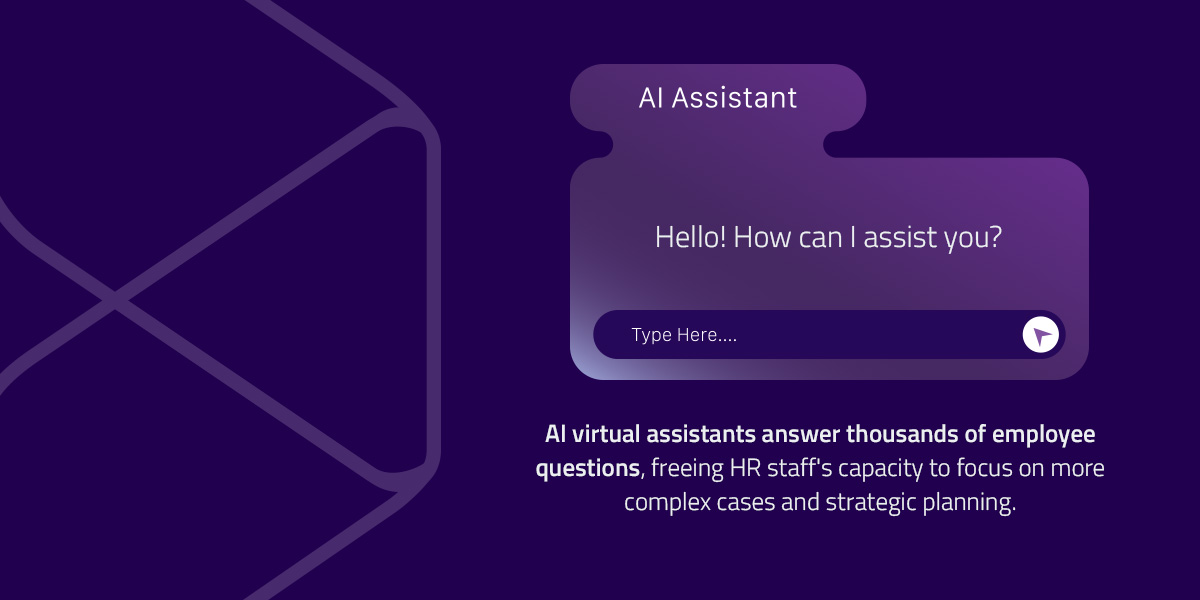
AI virtual assistants answer thousands of employee questions, freeing HR staff's capacity to focus on more complex cases and strategic planning.
It can also improve decisions during benefit enrollment. AI can analyze an employee's healthcare usage history and financial situation and recommend appropriate plans that match their specific needs and budget.
When considering technology solutions for your business, look for platforms that prioritize data security, transparency, and privacy. Ask vendors how they protect employee health data and if AI recommendations can be explained in plain language so employees can easily understand them.
Trend 3: The Focus on Holistic Employee Well-Being
Mental health and financial wellness, which were once optional perks, are now essential benefits. Employees expect comprehensive well-being support from employers.
Health polls show that employees largely assign responsibility for workplace mental health to managers and senior leadership. Employees who work for companies that offer mental health training are far more likely to say their company prioritizes worker mental health — 69% versus 40% without training — and feel less worried about stigma. Flexible scheduling is another essential for many employees, and 86% of caregivers say that it is essential to their mental health.
Research shows that employee well-being directly impacts productivity and retention. When workers feel supported holistically, they perform better and stay longer.
This trend means expanding your view of benefits beyond health insurance to create an environment where employees thrive physically, mentally, and financially.
Trend 4: The Demand for Flexibility and Personalization
The one-size-fits-all benefits plan is phasing out. Flexibility and personalization is in. With a workforce that spans generations, life stages, and personal situations, you need diversity to accommodate your employees.
Millennials and Generation Z workers value benefits like flexible work hours and family-friendly perks. They prioritize work-life balance and benefits that support their lifestyle.
Employers are now offering more flexible options. A Lifestyle Spending Account (LSA) is becoming a popular choice as organizations seek more ways to provide personalization without complexity.
Flexible benefits can include:
- Flexible work arrangements: Give employees work flexibility with remote options, hybrid schedules, and compressed workweeks.
- Family support: Support employees with benefits that fit their personal life circumstances, such as childcare assistance and elder care resources.
- Financial wellness: Help with their finances through retirement planning and emergency savings programs.
- Lifestyle spending accounts: Offer employer-funded accounts to use for qualified expenses that matter to them.
Benefit personalization shows employees that you see them as unique individuals with different needs and responsibilities.
Trend 5: The Expansion of Virtual-First Care
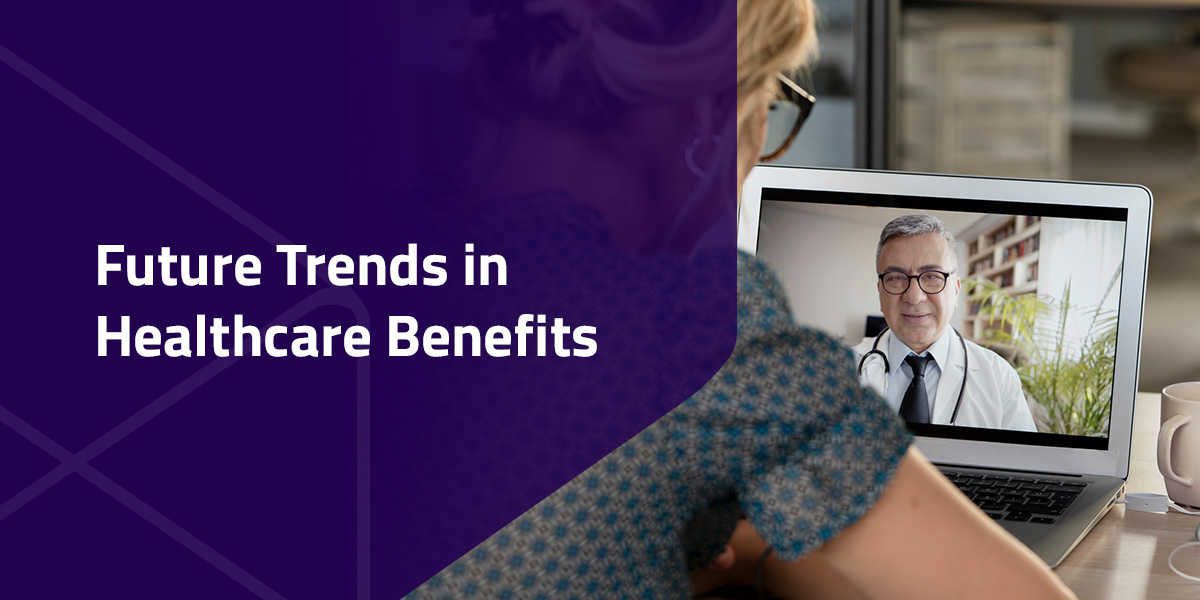
Telehealth has evolved beyond video appointments into virtual-first primary care models. These programs make virtual care the initial point of contact for members, with in-person care available when medically necessary.
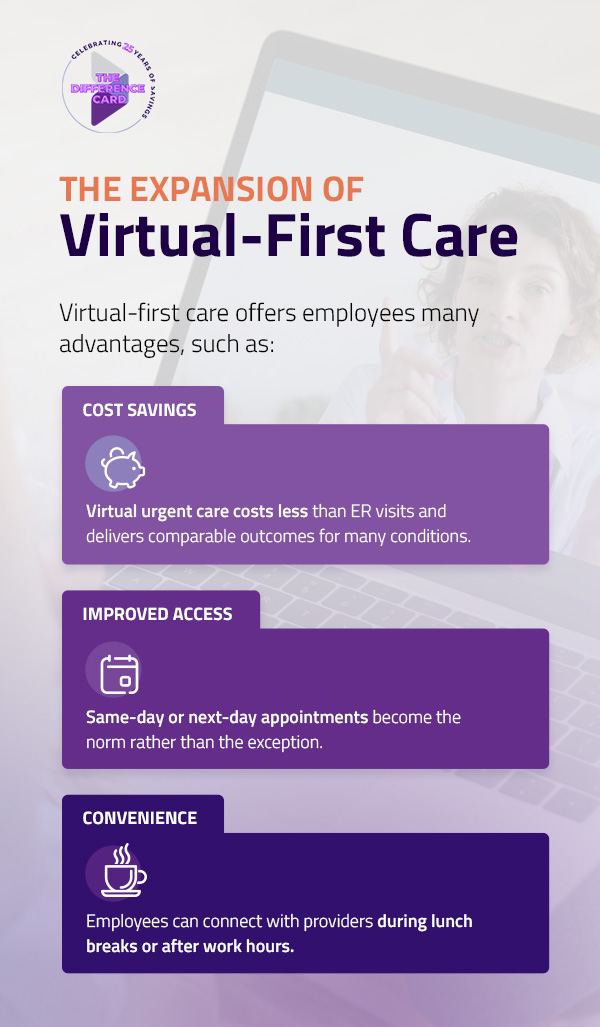
Virtual-first care offers employees many advantages, such as:
- Cost savings: Directing members to the appropriate level of care prevents costly emergency room visits. Virtual urgent care costs less than ER visits and delivers comparable outcomes for many conditions.
- Improved access: Employees in rural areas or with mobility challenges can receive care without having to overcome travel barriers. Same-day or next-day appointments become the norm rather than the exception.
- Convenience: Quick appointments with little to no commute time or waiting rooms. Employees can connect with providers during lunch breaks or after work hours.
However, implementing virtual-first plans comes with challenges, too:
- Overuse risks: Virtual care without clear guidelines can lead to fragmented treatment. Employees may receive care from multiple providers, leading to duplicate tests or conflicting treatment plans.
- Care coordination gaps: Multiple providers may give conflicting advice when communication systems are not in place. Ensuring virtual providers have access to comprehensive health records is essential.
When choosing a virtual-first program, you need an option with strong care coordination and clear guidelines on when in-person care is necessary. Look for programs that integrate with your existing health plan and maintain continuity of care. When implemented properly, virtual-first care expands access while controlling costs — a win for you and your employees.
Your Benefits Action Plan
Turn these insights into valuable benefits of innovation. These strategies help you address benefit trends, optimize costs, and boost employee satisfaction.
Control Healthcare Costs With a Medical Expense Reimbursement Plan
A Medical Expense Reimbursement Plan (MERP) controls healthcare costs while maintaining quality employee coverage. It's an employer-sponsored benefit program that reimburses employees for qualifying out-of-pocket medical costs, including copays, deductions, and prescriptions.
A MERP offers several advantages:
- Only pay for actual claims: With a MERP, you only pay for claims that actually occur, allowing you to retain unused funds when employees have healthy years. This creates immediate cash flow advantages compared to traditional fully insured plans, where premiums are fixed regardless of claim experience.
- Tax benefits: Under IRS Section 105, a MERP provides employers with tax-deductible reimbursements and employees with tax-free benefits, creating overall value.
- Plan flexibility: You can customize coverage to match your workforce needs without carrier-imposed restrictions. You control plan features, provider networks, and cost-sharing arrangements.
A MERP works well for organizations with predictable claim patterns or those willing to take on more financial responsibility in exchange for potential savings. It's not right for every organization, but it's worth exploring if you face annual premium increases that strain your budget. Modern cost-containment solutions incorporate MERP strategies as a key component of comprehensive benefits programs.
Improve Employee Experience With Technology
Invest in benefits administration platforms that simplify enrollment and provide decision-support tools for employees.
A modern benefits administration system automates workflows and reduces the manual effort on HR teams. Instead of spending hours processing paperwork, your team can focus on initiatives to drive value.
Implementing a mobile app lets employees review their coverage details, submit claims, and find health providers at any time. Real-time eligibility verification prevents surprises at the doctor's office. Automated reminders notify employees to use their preventive care benefits before they expire.
A strong understanding of benefits empowers employees to make better healthcare choices, resulting in improved health and lower costs.
Invest in Holistic Well-Being and Mental Health Support
Offer your employees more than basic coverage. Integrate mental health resources and wellness programs into your benefits program. It can include an Employee Assistance Program (EAP), mental health days, wellness challenges, or financial planning resources.
The return on investment for your business is retention and productivity. Employees who feel supported stay longer and contribute more. The Difference Card helps employers build benefits plans that support employees across all dimensions of well-being.
Don't treat mental health as an add-on. Make it central to your benefits philosophy and communicate that support clearly and often.
Offer Greater Flexibility With an HSA and LSA
A Health Savings Account (HSA) and an LSA give employees choice and control over their benefit dollars.
An HSA is a personal savings account used to pay for medical expenses. Paired with a high-deductible health plan, it offers triple tax advantages:
- Contributions are tax-deductible.
- Growth is tax-free.
- Withdrawals for qualified medical expenses are tax-free.
They also roll over each year, allowing employees to build long-term healthcare savings.
An LSA is an employer-funded account that gives employees flexible dollars to spend on qualified expenses. Unlike an FSA or HRA with predefined categories, an LSA can cover everything from gym memberships to professional development — whatever the employer chooses to include. The growing popularity of an LSA reflects the demand for benefits that adapt to individual needs.
Offering these options shows you trust employees to make their own healthcare and wellness decisions.
Frequently Asked Questions About Healthcare Benefit Trends
We answer some common questions to help clarify how 2026 trends affect your benefits planning.
How Does AI Change Employee Benefits Administration?
AI changes employee benefits administration by automating routine tasks and helping employees navigate their benefits more easily. AI-powered chatbots answer common benefit questions instantly, provide predictive analytics to identify cost trends, and offer support tools that guide employees to the most cost-effective care options. For HR teams, AI means less time on administrative work and more time on strategy.
What's the Difference Between a MERP, an HRA, and an HSA?
The difference between a MERP, an HRA, and an HSA is their purpose. A MERP is an employer-funded plan that reimburses employees' qualified medical expenses, offering flexibility in plan design and tax advantages under IRS Section 105. A Health Reimbursement Arrangement (HRA) is also employer-funded but is included with a specific health plan, making it harder to change carriers. An HSA is employee-owned, pairs with high-deductible health plans, and funds roll over every year.
Why Are Mental Health Benefits Important for Employee Retention?
Mental health benefits are important for employee retention because an employee's mental state directly impacts job performance, engagement, and loyalty. When employees with mental health challenges aren't supported, they're more likely to struggle with burnout, take more time off, or choose to leave your business. Offering employees valuable mental health benefits shows that their well-being is important to you. It builds trust, lowers turnover costs, and creates a healthier workplace culture.
How Do Compliance and Regulatory Changes Affect Benefits Planning?
Healthcare compliance and regulatory changes affect everything, from mental health parity requirements to transparency rules. To stay compliant, you need to monitor federal and state changes, update your plan documents and ensure communication meets disclosure requirements. If you're noncompliant, you can face fines and lawsuits. Experienced benefits partners help you stay on top of these changes without constant worry about missing critical updates.
Build a Competitive and Cost-Effective 2026 Benefits Plan
Navigating 2026 healthcare benefits doesn't have to feel overwhelming. With the right partner, you can turn these healthcare benefit challenges into opportunities.
The Difference Card specializes in helping employers design benefits plans that control costs without sacrificing quality. Our MERP expertise allows you to pay only for claims that actually occur, keeping more money in your budget. And with The Difference Guarantee, you get predictable claim liability backed by an A-rated insurance carrier.
Whether you're looking to implement a MERP, streamline benefits administration with modern technology, or offer more flexible options like an HSA and an LSA, we're here to help. Our team brings over 20 years of experience delivering cost-saving healthcare solutions — nearly $1 billion in savings for our clients and counting.
Ready to build a benefits plan that works for your business and your employees? Contact The Difference Card today to explore how we can help you navigate 2026 with confidence.